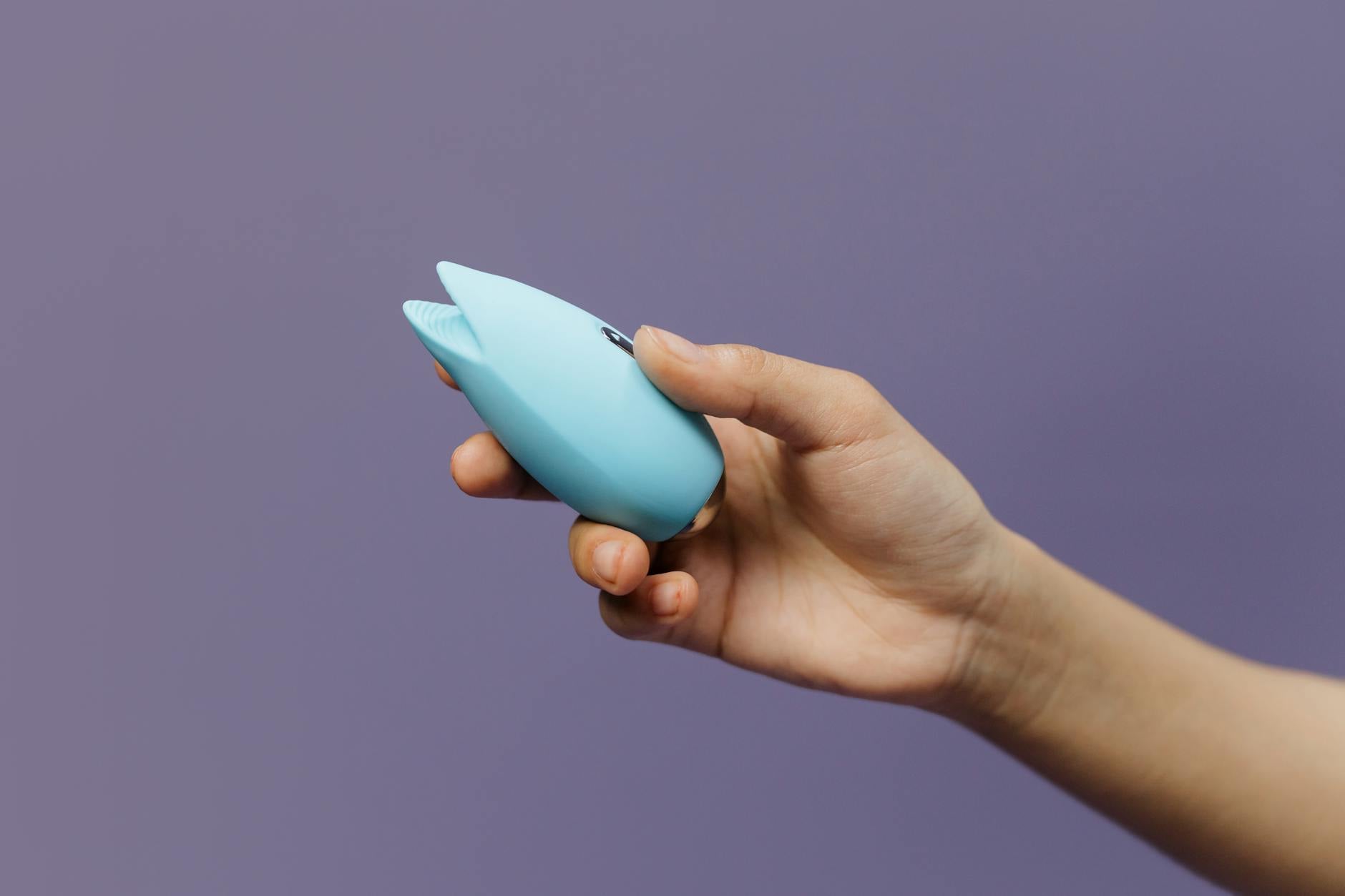
Let's start with the awkward truth
There is no universal vibrator. Your sensitivity is shaped by genetics, hormones, medication, stress, arousal patterns, and history. Two people can have completely opposite responses to the same device. One person finds gentle suction blissful. Another needs intensity or they feel nothing at all.
This isn't a flaw. It's just anatomy and neurology doing their thing. The problem is that most vibrator shopping happens in a vacuum. You're guessing based on reviews written by someone with a completely different body. That's why so many people end up with devices that feel wrong.
Here's how to actually figure out what works for you.
Understanding your baseline sensitivity
Before you pick a lemon vibrator, you need to know whether your clitoris falls on the hypersensitive side or the less-responsive side. This isn't static. It changes with your cycle, your stress, your relationship status, medication, and age. But right now, today, you have a baseline.
Start here: when you touch yourself manually, what does it take to feel something good? If light touch alone creates noticeable sensation, you're probably in the hypersensitive range. If you need consistent, firmer pressure to feel arousal building, you're likely in the less-responsive range. Most people land somewhere in the middle and shift depending on circumstances.
Hypersensitive clitorises benefit from gentler stimulation patterns. Lemon vibrators with graduated intensity levels and suction-based technology are often a better fit than high-powered buzzers because suction distributes pressure across a wider area rather than pounding directly on the nerve endings.
Less responsive clitorises need either consistent intensity, varied patterns, or both. These tend to respond well to the stronger vibration modes or escalating suction patterns that build over time. The key is sustained engagement without feeling numb.
The suction advantage for variable sensitivity
This is where lemon vibrators stand out. Suction-based clitoral stimulation works differently than traditional vibration. Instead of direct contact creating friction, suction creates a gentle pulling sensation that stimulates the clitoral complex as a whole, not just the external glans.
For people with variable sensitivity, this matters. On days when you're extra sensitive, you can use the lowest suction setting. On days when your clitoris feels less responsive, you can increase intensity or use a pattern that rhythmically changes the pressure. You're not locked into one mode of stimulation.
If you're hypersensitive, suction allows you to experience pleasure without the raw feeling that direct vibration sometimes creates. If you're less responsive, suction gives you the option to gradually increase pressure as arousal builds, which often feels more natural than jumping straight into high intensity.
Medication, hormones, and why your usual settings might suddenly feel wrong
This is the plot twist nobody mentions in vibrator guides. Antidepressants, blood pressure medication, hormonal birth control, and hormonal changes all shift your baseline sensitivity. The intensity setting that worked perfectly for a year suddenly feels too strong or too weak.
If you've recently started a new medication and your usual vibrator feels off, you haven't broken. Your neurochemistry has shifted. This is temporary, and it's fixable by adjusting your intensity level or trying a different pattern.
Similarly, if you're navigating hormonal transitions like perimenopause or menopause, your sensitivity fluctuates across the month. Some days the suction pattern that felt ideal last week feels overwhelming. Other days the same setting barely registers. This is why having a lemon vibrator with multiple intensity levels and pattern options is genuinely valuable. You're not stuck with one fixed experience.
Anxiety and tension change everything
If you're in a heightened state of stress or anxiety, your pelvic floor tightens. A tight pelvic floor makes your clitoris feel either numb or hypersensitive depending on your body. Stress can trick you into thinking you need a more intense vibrator when what you actually need is relaxation, lubrication, and time.
Before you adjust your vibrator settings, check in with yourself. Are you actually less sensitive today, or are you carrying tension? If it's tension, a few minutes of deep breathing, warming up your body, and using extra lubrication will often restore sensation without changing your device.
If you're chronically stressed or anxious, and you've noticed numbness creeping in over time, this is worth addressing directly. Pelvic floor physical therapy, somatic practices, or talk therapy can make a meaningful difference. The right lemon vibrator can enhance pleasure, but it can't fix underlying tension on its own.
Building your sensitivity profile
Here's a practical framework. Over the next few weeks, track three things when you masturbate:
1. The environment. Are you rushed or relaxed? Alone or worried someone will hear? At home or traveling? Your parasympathetic nervous system (the system that allows arousal) works better in safe, unhurried spaces.
2. The warm-up. How long did you spend on foreplay before using your vibrator? Did you use lubrication? The faster the warm-up, the less responsive your clitoris often feels. This is normal.
3. The pattern and intensity. Which settings actually delivered? Which felt frustrating? Write it down without judgment.
After a few weeks, patterns emerge. You'll see that your sensitivity isn't random. It tracks with rest, stress levels, time of month, and how much mental space you gave yourself. Once you see the pattern, you can stop blaming your vibrator for what's actually a timing or context issue.
How to test a lemon vibrator before you commit
You can't do a hands-on test before buying, but you can ask the right questions and look for specific features. Does the vibrator have multiple intensity levels? Not just "low and high," but graduated settings like 1 through 10? That flexibility is crucial for someone figuring out their sensitivity baseline.
Does it have pattern options? Fixed patterns or customizable ones? Patterns matter because they break up the monotony and let your nervous system reset slightly between pulses, which can feel less numbing over time.
Is the intensity adjustable before contact, or only once you're already using it? Some lemon vibrators let you set the level, start the vibration, and then apply it. Others require you to already be in contact to adjust. The first option is gentler for sensitive people.
Does it have a ramp-up feature? Some lemon vibrators start at level 1 and gradually increase to your chosen level over 10 seconds or so. This is brilliant for hypersensitive clitorises because it lets your nerves acclimate rather than shocking your system with sudden intensity.
The real test: how your body responds over time
Your clitoris will tell you if you've chosen right. With the correct intensity and pattern for your sensitivity level, you should feel:
Steady arousal building, not plateauing or going numb. If you go numb within a few minutes, the setting is too intense for right now. If you never feel arousal building after several minutes of use, you might need more intensity or a different pattern.
Orgasms that feel present and integrated, not dissociated or numb. If you can reach orgasm but it feels muted or far away, that's a sign the stimulation isn't quite matched to your body's needs.
The ability to experiment without pain. Slight discomfort as you're finding your edge is fine. Sharp pain or bruising means something isn't right. Stop and try a lower setting.
When you nail your sensitivity match, you'll know. The pleasure builds naturally, feels grounded in your body, and doesn't require constant mental effort to access. That's the signal that you've found your rhythm.
Frequently asked questions
What's the difference between lemon vibrators and other clitoral vibrators?
Lemon vibrators use suction technology rather than direct vibration. Suction creates a gentle pulling and releasing sensation that stimulates the whole clitoral complex. This tends to feel less intense and more diffuse than a wand vibrator, making it often easier for people with high sensitivity to control. Other clitoral vibrators like traditional wands or bullet vibrators rely on direct vibration against the clitoral surface, which can feel overwhelming for some bodies. The lem vibrator, for example, offers graduated suction levels, giving you precise control over intensity.
Can I use the same lemon vibrator if my sensitivity changes due to medication?
Yes, absolutely. If your medication changes your baseline sensitivity, you typically just need to adjust your settings rather than buy a new device. Most lemon clitoral vibrators have multiple intensity levels and patterns. Start lower than your previous go-to setting and work your way back up. Many people find that with medication adjustments, they eventually return to their original sensitivity baseline. If permanent changes occur, having those intensity options means your existing vibrator still works for you.
How do I know if I'm hypersensitive or just need more warm-up time?
The clearest test is consistency. If you're hypersensitive, intense stimulation feels overwhelming almost immediately, regardless of warm-up time. If you simply need more warm-up, gentle manual touch followed by gradual vibrator intensity eventually gets you to a comfortable place. Try this: spend 10-15 minutes on manual foreplay and lubrication, then start your vibrator on the lowest setting. If that feels manageable, you likely need warm-up time. If even the lowest setting feels too intense, you're probably hypersensitive and benefit from gentler options like suction-based lemon sexual toys.
Why do I feel numb with a vibrator I used to love?
This happens for several reasons. Desensitization can occur with heavy use over time, especially if you're using the same pattern and intensity session after session. Your nervous system adapts to repetitive stimulation. Solution: take breaks, vary your patterns, switch up your intensity, or try a different device for a while. Alternatively, numbness can signal stress, medication changes, hormonal shifts, or pelvic floor tension. If the numbness is sudden and persistent, it's worth checking in with yourself about what's different: Are you more stressed? Did your medication change? How's your sleep?
Is it okay to start with a lower-intensity lemon vibrator if I'm unsure about my sensitivity?
Completely. Starting gentle is smart. You can always increase intensity or patterns later, but you can't un-feel overwhelming sensations. Lemon vibrators with multiple settings let you explore at your own pace. Many people discover they prefer lower intensities than they expected, especially once they realize how much warm-up and relaxation matter. A gentle lemon sucker gives you that safety net while you're figuring out your body.
How long should it take to orgasm, and if I'm not there yet, is my vibrator wrong?
There's no time standard. Some people take 5 minutes. Others take 30. Orgasm timing depends on arousal level, stress, hormones, how much mental space you're in, and many other factors beyond your vibrator. If you're noticing you used to come faster and now it's taking much longer, check the non-vibrator variables first: Am I more stressed? Less present? Did something in my relationship or health shift? These often matter more than your device. That said, if you're making genuine effort and feel completely numb even with good warm-up, it might be time to try a different intensity or pattern.
The bottom line
Your sensitivity isn't fixed, and your vibrator doesn't have to be either. Choosing a lemon vibrator based on your actual sensitivity level, not just hype or your friend's recommendation, is the fastest way to actually enjoy it. Pay attention to how your body responds. Adjust as you need to. And remember that pleasure is information. If something doesn't feel right, that's your body telling you something useful.