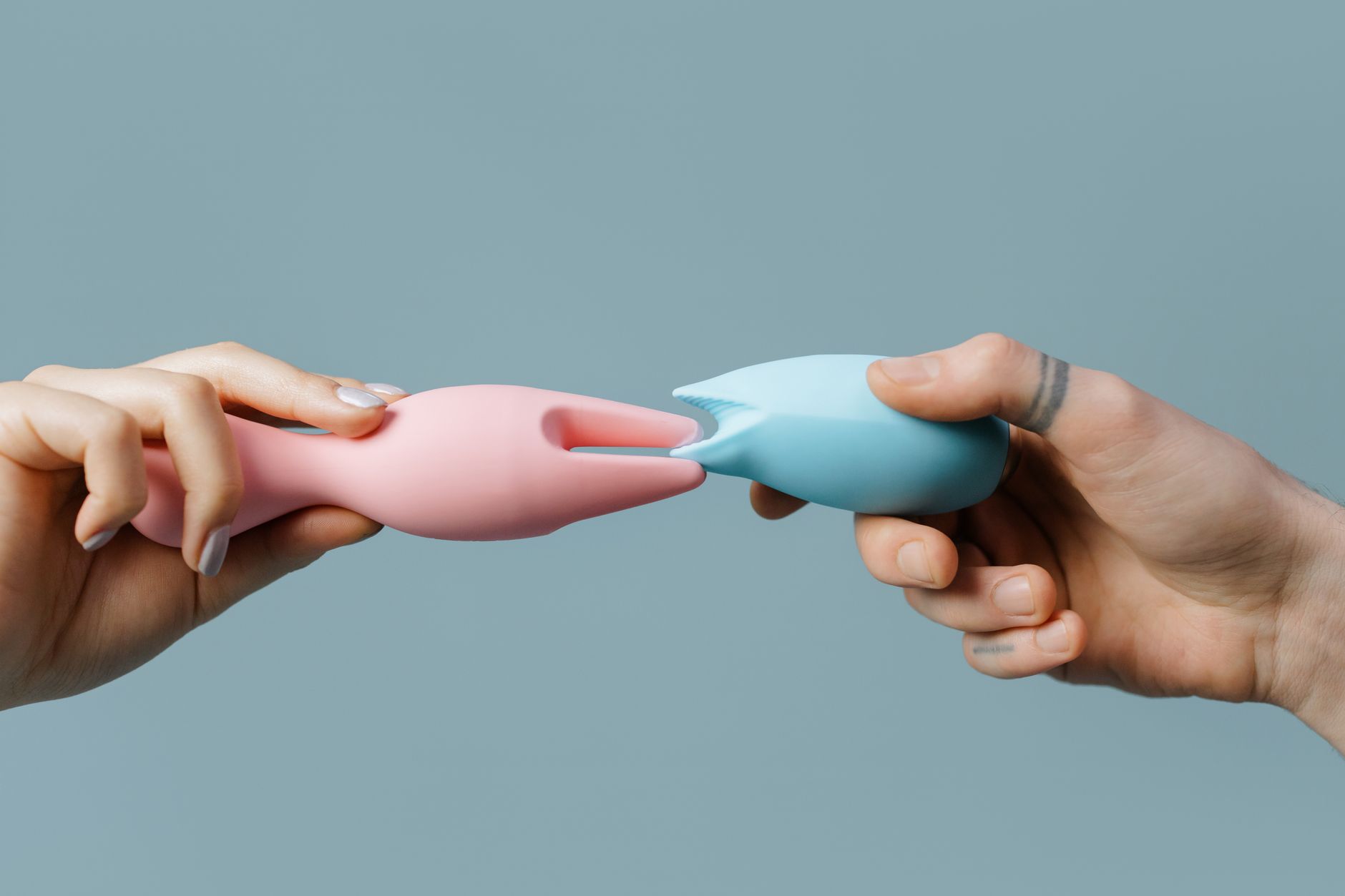
Let's be real about why therapists are talking about this now
For decades, sex toys lived in a weird blind spot in couples therapy. Therapists would recommend communication exercises, date nights, sensate focus work, and everything else under the sun. But when it came to tools that could actually shift the nervous system and rebuild sensation together? Silence.
That's changing. A growing number of relationship therapists, especially those trained in somatic work and trauma-informed practice, now see lemon vibrators and other quality clitoral vibrators as legitimate instruments for reconnection. Not substitutes for emotional work. Tools that make the emotional work possible.
Here's the thing that gets lost in the noise: pleasure itself is a form of communication. When you've been stuck in conflict or numbness for months or years, your body doesn't trust the other person's touch. A vibrator can help reset that. It bypasses some of the psychological defensiveness and gives the nervous system permission to experience sensation again. Then you rebuild from there.
Why vibrators show up in couples work, specifically
Three reasons this matters in a therapeutic context.
First, they recalibrate sensation. After long periods of emotional distance, partners often report that touch from their partner feels flat or anxiety-provoking. The nervous system has learned not to trust it. Lemon vibrators work differently. They're external, consistent, not tied to old relational patterns. They give the body a chance to remember what pleasure feels like before your partner touches you again.
Second, they create shared novelty. Couples therapists know that novelty is one of the fastest ways to shift a stuck dynamic. Introducing a lemon sexual toy is novel, yes, but it's also a guided choice. You're not spontaneously breaking the rules. You're saying "let's try something different, together, on purpose." That framing matters.
Third, they slow things down. A lemon clitoral vibrator typically takes longer to build sensation than penetration or typical partner touch. That extended timeframe forces presence. You can't phone it in. Both partners have to stay with what's happening.
The consent conversation comes first
This is non-negotiable. If you're in any form of couples therapy or trying this at home, the entire thing breaks down without real consent.
Here's what I mean by real consent, not just agreement. Both partners need to understand what's being proposed, why, and what they're genuinely comfortable with. Not "I guess" or "If you want to." Actual interest, or at least genuine openness.
The conversation looks like this.
One partner brings it up: "I've been thinking about trying something different to help us reconnect. My therapist mentioned that some couples use vibrators as part of their intimacy work. I'm interested in exploring that. What's your gut reaction?"
Then pause. Let them think. Don't fill the silence.
If they say no, that's the end of that conversation. You don't negotiate. You don't ask why. You say "Okay, I hear you," and you move on to the next tool your therapist suggested.
If they say "Maybe" or "I need to think about it," give them real time. Not "let me know by Friday." A few days minimum.
If they say yes, then you dig into specifics. Which person will be using the vibrator? Will you use it solo first, or together? What role does the partner play? Do you want to stop mid-session if it doesn't feel right? All of it gets named.
Choosing the right lemon vibrator for this work
Not all vibrators are equal for couples reconnection exercises. Here's what to look for.
Go for simple and approachable. A basic lemon vibrator with 2-3 speed settings is better than something with nine modes and a learning curve. You don't want either partner distracted by figuring out the tech. The point is sensation, not gadgetry.
Choose something with a broad, flat contact area. Lemon clitoral vibrators use suction and broad stimulation rather than pointed vibration. That's actually ideal for this work because it distributes sensation across a wider surface area. It's less intense, easier to build with gradually, and less likely to create performance pressure.
Make sure it's quiet. Anxiety kills the work. If you're hyperaware of the sound, your nervous system won't settle. A silent or nearly silent lem vibrator means you can both focus.
Pick something you feel good about owning. This sounds small, but shame kills everything. If opening your nightstand and seeing a lemon sexual toy triggers "what have we become," that energy will show up in your body and your partner will feel it. So choose something beautiful, something you'd actually be proud to see.
The first session: what to actually do
You're not jumping straight to partnered use. This first phase is solo.
One partner uses the lemon vibrator alone, with the other partner present but in a non-sexual role. The partner who's watching is there to learn, to witness, and to stay calm. This serves two purposes. It removes the performance pressure on the person using the vibrator (you're not performing for your partner, you're exploring for yourself). And it helps the partner who's watching separate the vibrator from their own insecurity (they're seeing it as a tool, not a threat).
Set a timer for 15 minutes. No pressure to orgasm, no goal at all. Just sensation.
The person using the vibrator starts at the lowest setting and goes slow. Breathe. Notice what feels good, what doesn't, where the resistance shows up in your body. If anxiety spikes, you stop.
After 15 minutes, you're done. No processing right then. You just close the vibrator away, have some water, and maybe 20 minutes later you talk about it if either person wants to.
Do this 3-4 times, solo, before you move to partnered work.
When you do move to partnered work
The second phase builds differently.
You're still using a lemon clitoral vibrator, but now the receiving partner is being touched by their partner while using it. Not penetrative touch. Hands on your back, your arms, your inner thighs. Your partner is there but not intruding on the space where the vibrator is working.
Start with 10 minutes. Receiving partner uses the vibrator. The other partner offers slow, gentle touch. No kissing yet, no intensity. Just presence.
The key instruction for the touching partner: match your partner's breathing. If they speed up, you speed up. If they slow down, you slow down. Your touch is echoing their nervous system, not leading it.
After 10 minutes, you pause.
Then you switch. The other partner uses the lem vibrator while the first partner offers touch. Same rhythm, same slowness.
You do this version for 2-3 weeks, usually once or twice a week, before anything more intense happens.
Why this actually works in therapy
The arc of these exercises mirrors what good couples therapy does. You're building tolerance for shared pleasure. You're learning that novelty doesn't mean betrayal. You're proving, to your nervous system, that you can be vulnerable with this person again without getting hurt.
The lemon sexual toys aren't doing the emotional work. Your therapist is. But the vibrator is making the emotional work possible. It's giving your nervous system something real to anchor to. Not memory, not promise. Actual sensation.
Most couples who stick with this for 6-8 weeks report that their overall touch, without the vibrator, also improves. The nervous system generalizes. Once you know your partner's touch can lead to pleasure again, that belief doesn't stay isolated to vibrator sessions. It bleeds into the rest of your intimacy.
Common worries, straight answers
"Won't the vibrator replace me?" No. It's the opposite. The vibrator is a bridge back to your partner, not away from them. If anything gets replaced, it's the numbness.
"What if one of us never feels comfortable with this?" Then you don't do it. There are other exercises. This is one tool among many. Your therapist can suggest alternatives.
"How do we know if it's actually working?" You'll notice it in small ways first. More spontaneous touch. Less tension during regular sex. Your partner asking "should we do our exercise tonight?" instead of you pushing for it. Those are the real signals.
"Is this something we need to tell our therapist?" Yes, absolutely. Bring it up in session. Your therapist can give you specific guidance for your situation and track how it affects your overall dynamic. This isn't secret work.
If things get awkward
They probably will, a little. That's not a sign you're doing it wrong.
Your brain is rewiring something. Rewiring is uncomfortable. You'll probably laugh nervously. You might feel weird about your body. Your partner might ask a question that stings. All of that is normal.
If something becomes genuinely painful or destabilizing, you stop and you talk to your therapist before the next attempt. That's not failure. That's information.
Where to go from here
Start with a conversation. Not with your partner yet. With yourself. Do you actually want to try this, or does it feel like pressure? If it's genuine interest, bring it to your partner in the way I described earlier.
If they're open, start with a simple, approachable clitoral vibrator. Read the care guide. Use it solo first. Go slow. Let your nervous system learn that this is okay.
Then bring it to your next therapy session. Not to perform, but to tell your therapist what you tried and what shifted. That conversation is where the real work happens.
People also ask
Can we use a vibrator if we're not in formal therapy?
Yes. You don't need a therapist's prescription to try these exercises. But if you do have access to a therapist, especially one trained in somatic work or couples therapy, having them guide you makes a difference. They can troubleshoot if things feel stuck and help you understand what's actually shifting underneath the surface.
How long does it take to see a difference?
Most couples notice something by week 3 or 4. Usually it's small: more eye contact during sex, spontaneous hand-holding, less defensiveness in conversations about intimacy. Deep reconnection takes longer. Plan for 8-12 weeks of consistent work before you fully feel the shift.
What if we get turned on and want to have sex?
Then you probably will, and that's fine. These exercises aren't rigid prescriptions. They're scaffolding. Once the scaffolding helps you reconnect, you build from there however feels right for you.
Is it weird to use the same vibrator together?
Not at all. Most couples who do this work end up sharing one lemon clitoral vibrator. It becomes part of your shared ritual. You wash it between uses, store it somewhere you both know about, and it's just part of your intimacy kit. The shared ownership is actually part of what makes it work.
What if one partner isn't experiencing pleasure from the vibrator?
That's information, not failure. Some people take longer to warm up to the sensation of a lemon vibrator. Some prefer different kinds of touch. If after 4-5 solo sessions someone genuinely isn't feeling anything, talk to your therapist. They might suggest a different tool or a different approach altogether. The goal is connection, not vibrator evangelism.
Can we use vibrators if we're healing from infidelity?
Yes, and sometimes they're especially helpful. Infidelity damages the nervous system's ability to trust the other partner's touch. A vibrator can help rebuild that, under therapeutic guidance. But this is something to definitely discuss with your couples therapist before you try it solo. The timing and approach matter a lot in this context.