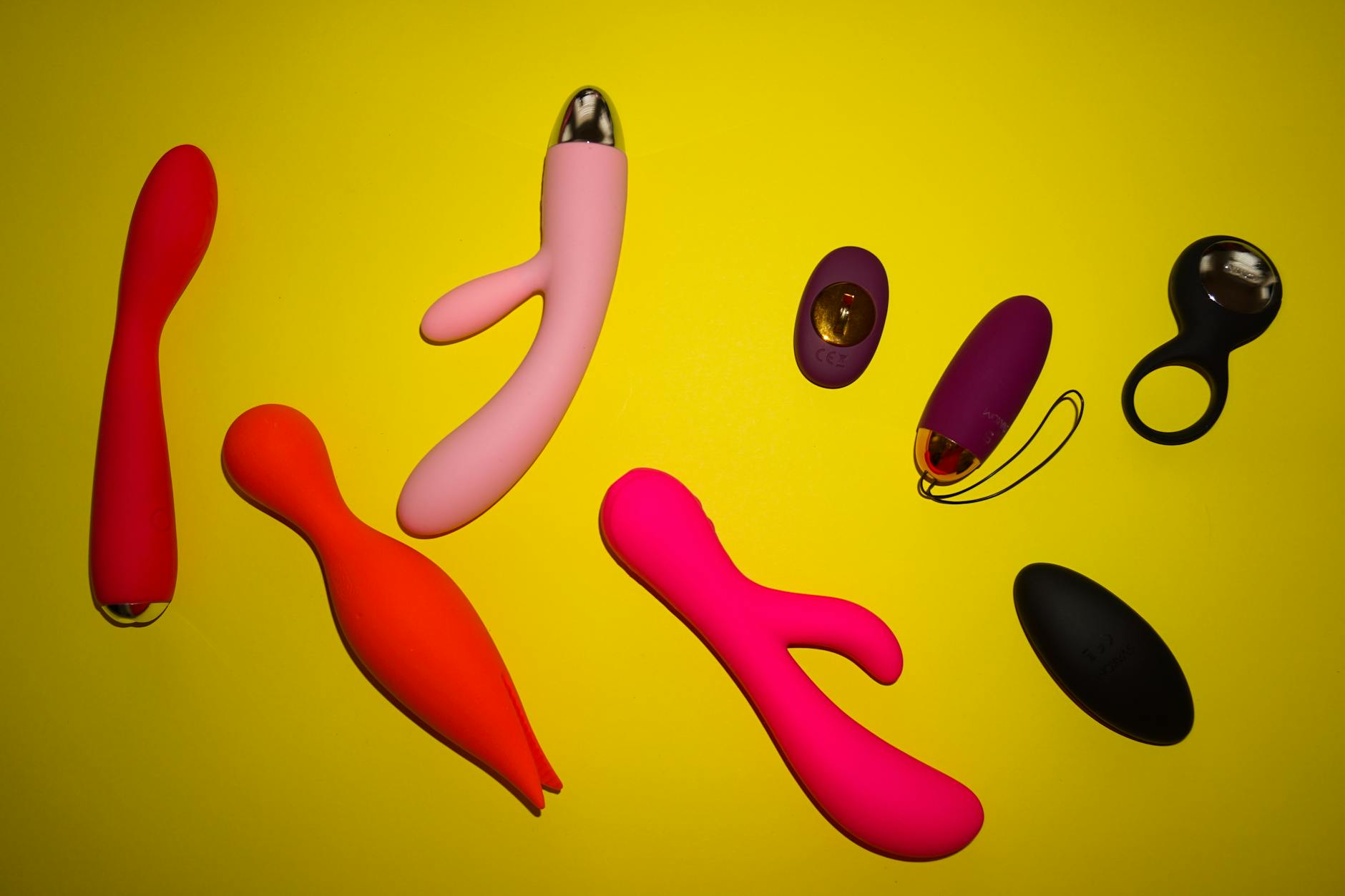
How to Use Lemon Vibrators During Menopause and Hormonal Transitions
Menopause arrives with a lot of misinformation. Most of it lands somewhere between "you're broken" and "nothing changes at all." Neither is true. What actually happens is your body responds differently to stimulation, and the tools that work best shift too. That's not loss. That's an adjustment worth understanding.
I work with a lot of people navigating this transition, and one thing surprises them every time: lemon vibrators often work better after menopause than before, once you know how to use them. Not because anything magical happened, but because their design solves a real problem hormonal shifts create. Let me walk you through exactly why.
What hormonal changes actually do to sensation
Here's what happens physiologically when estrogen drops. Vaginal and vulvar tissue becomes thinner and drier. Blood flow decreases, which means arousal builds more slowly. The pelvic floor muscles lose some elasticity and support. Orgasms can feel different. Shorter. Shallower. Or sometimes more concentrated in one spot instead of full-body waves. Everyone's different, and that variation is completely normal.
But here's what doesn't change: the clitoral nerve structure. The capacity for pleasure in your brain. Your ability to orgasm, often intensely. These parts of the equation stay exactly the same.
The real issue isn't your capacity. It's friction. Traditional vibrators that rely on direct pressure or rapid back-and-forth motion can feel too intense on thinner tissue. This is where air-pulse technology like you find in lemon clitoral vibrators changes the game. Instead of friction, you get gentle suction and pulsing stimulation. It's a completely different sensation, and for a lot of people in hormonal transition, it's exactly what makes pleasure accessible again.
Why lemon vibrators feel different during menopause
A lemon vibrator works through air-pulse technology: it creates a gentle suction sensation rather than direct vibration. That design choice matters tremendously during menopause for three specific reasons.
First, air-pulse stimulation doesn't require the same tissue resilience that friction-based toys do. Your tissues don't have to stretch or withstand pressure the way they would with a traditional vibrator. You're getting intense stimulation without the mechanical stress.
Second, the sensation itself changes. Many people report that air-pulse feels more like oral stimulation than vibration. It's broader, gentler, and somehow more complete. That matters when your nervous system is recalibrating how it reads pleasure signals.
Third, lemon sexual toys offer variable intensity settings that you can dial up slowly over time. You're not locked into one experience. You start low, let your body adjust, and increase as it feels right. That gradual progression is kinder to sensitive tissue and gives your nervous system time to recognize what's happening as pleasure instead of discomfort.
The adjustments that actually help during hormonal transitions
Let's get specific. Here's what I recommend to people using lemon vibrators during and after menopause.
Start with lubrication, always. This isn't because your body is broken. Thinner tissue benefits from additional slip, same way a silk pillowcase is gentler than cotton. Water-based lubricant works best because it won't damage silicone toys and feels closest to your body's natural lubrication. Reapply as needed. The lem vibrator glides better with lube, and you deserve that ease.
Use the lowest settings first. Your lemon clitoral vibrator has multiple intensity levels for exactly this reason. Start at pattern 1 or 2. Spend time here. Your body needs to remember what pleasure feels like at low stimulus before you ask it to respond to higher intensity. This isn't weakness. It's smart nervous system management.
Budget more time for arousal. Your body isn't broken, it's just slower to warm up. Instead of five minutes of foreplay, plan for fifteen to twenty minutes. This might mean starting with a different kind of stimulation first. Some people find it helpful to use a lem vibrator on lower settings while their partner touches them elsewhere, or to spend time with erotic content that engages their brain before diving into direct clitoral work.
Pay attention to your pelvic floor. Hormonal changes often make the pelvic floor tighter and less flexible. Before you use your lemon vibrator, spend a moment consciously relaxing this area. Breathe into your pelvic floor. Let the muscles soften. Then start with your toy. This simple step transforms the experience for a lot of people because a tight pelvic floor dulls sensation.
Why timing matters more now
During perimenopause and early menopause, hormonal fluctuations still exist. Your body might respond differently depending on where you are in any remaining cycle. This sounds frustrating, but here's the useful part: you can use this information.
Pay attention to when pleasure feels easiest and most accessible. Is there a pattern? Some people find that certain times of the month still feel more responsive, even as their cycles become irregular. If you notice a pattern, great. Work with it. Schedule time with your lem vibrator when your body naturally wants to cooperate.
Once you move into stable post-menopause, this becomes less relevant. Your hormones stabilize, your tissue adapts, and you're often working with a more predictable baseline. But during transition, this awareness helps.
The emotional layer, which is just as important as the physical one
Hormonal changes don't happen in isolation. They arrive alongside other life transitions. Kids leaving home. Relationship shifts. Changes in how your partner sees you or how you see yourself. Career pressures. Grief. All of that colors the experience.
Sometimes a decrease in desire during menopause isn't hormonal. It's emotional. Sometimes the barrier isn't physical sensitivity. It's mental noise. Sometimes your body isn't responding because your brain is full.
I mention this because a lot of people try their lemon sexual toys and wonder why they're not working the way they used to, and then they assume it's hormonal. Sometimes it is. But before you go down that path exclusively, ask yourself: What else shifted? What else is taking up mental space? Would you feel differently about pleasure if you weren't carrying this other thing?
A good lemon vibrator is a tool, not a cure-all. If the emotional foundation is shaky, the physical tool has limits. That's not the toy failing. It's context mattering.
When to add support or adjust further
If pain shows up during use, don't push through. Genitourinary syndrome of menopause is real and highly treatable. A menopause-informed doctor can prescribe topical estrogen creams that make a dramatic difference in tissue health and sensation. It's not giving up. It's using the right tool for the job.
If you're using your lemon clitoral vibrator regularly but still struggling to climax, talk to a healthcare provider about testosterone therapy. It's discussed less openly in some regions than others, but it's a real option for people whose desire or responsiveness has completely flatlined.
If it's a relationship issue, that's different. If you're using a lem vibrator alone and sensation feels fine, but you're not interested in touch from your partner, that's a conversation for a couples therapist, not a gynecologist. I see this confusion a lot. The body tool and the relationship tool are different things.
What often surprises people
Most folks expect menopause to shrink their sexual life. Instead, a lot of them find it expands in unexpected ways. The cognitive load of managing a cycle lifts. The anxiety about fertility disappears. The cultural messaging that tells you sex is primarily about reproduction stops applying.
For the first time in their lives, some people are free to explore their own pleasure for its own sake. No performance, no reproduction, no partner management. Just curiosity and sensation.
A lemon vibrator is a good companion for that exploration. It's designed to feel good on tissue that's thinner and more sensitive. It gives you control. You can adjust intensity, rhythm, and duration on your own timeline. That autonomy matters during any transition, and it matters especially now.
Frequently Asked Questions
How do I know if my lemon vibrator settings are too intense for menopause?
Your body will tell you. If you feel discomfort, rawness, or irritation during or after use, you're too intense. Back down two settings and try again. If even the lowest setting feels intense, add more lubricant. If that doesn't help, try shorter sessions at low intensity and gradually increase duration before you increase intensity.
Does the lem vibrator work if I'm on hormone replacement therapy?
Yes. HRT changes the timeline and intensity of sensation, but it doesn't make lemon clitoral vibrators stop working. Some people find they respond more quickly to stimulation on HRT, which means they might use higher intensity sooner. Others don't notice much difference. Use the same approach: start low, observe what happens, adjust from there.
Can I use my old lemon sexual toys from before menopause, or do I need new ones?
You don't need new toys. What changes isn't the toy. It's how you use it. Lower intensity, more lubrication, longer warm-up time, and more patience with your body. The same lemon vibrator that worked before will likely work now, just with different settings and context.
Is it normal for arousal to take longer with a lemon vibrator during menopause?
Completely normal. Your nervous system is recalibrating. Blood flow is changing. The sensory pathways are the same, but they're working with different hormonal support. Longer warm-up time isn't a problem. It's how your body works now. Budget for it, and you'll have a better experience.
What if I use my lem vibrator and still can't climax even with adjustments?
First, ask whether you expect to climax every time. That's not realistic at any stage of life, and it's especially not realistic during hormonal transition. Second, consider whether mental noise is the barrier. Third, talk to your doctor about whether tissue health or testosterone levels need attention. Fourth, remember that pleasure isn't binary. If your lemon vibrator feels good without leading to orgasm, that's still a win.
Should I use my lemon clitoral vibrator differently with a partner during menopause?
That depends on your partnership and what you want. Some people find that having a partner present adds anxiety during hormonal transition. Some find it helpful. Some use their lem vibrator alone and then use different touch with their partner. There's no right answer except the one that feels right for you and your specific dynamic.
Moving forward with your body as it actually is
Menopause isn't the end of your sexual story. For a lot of people, it's the chapter where they finally get curious about their own pleasure without the cognitive load of managing a cycle or worrying about conception. That's not nothing.
A lemon vibrator is a tool built for bodies that need gentleness without losing intensity. It's designed for exactly this moment. Trust your body, use lubrication, start low, and give yourself permission to explore at your own pace. Your pleasure isn't behind you. It's right in front of you, waiting for you to show up on your own terms.