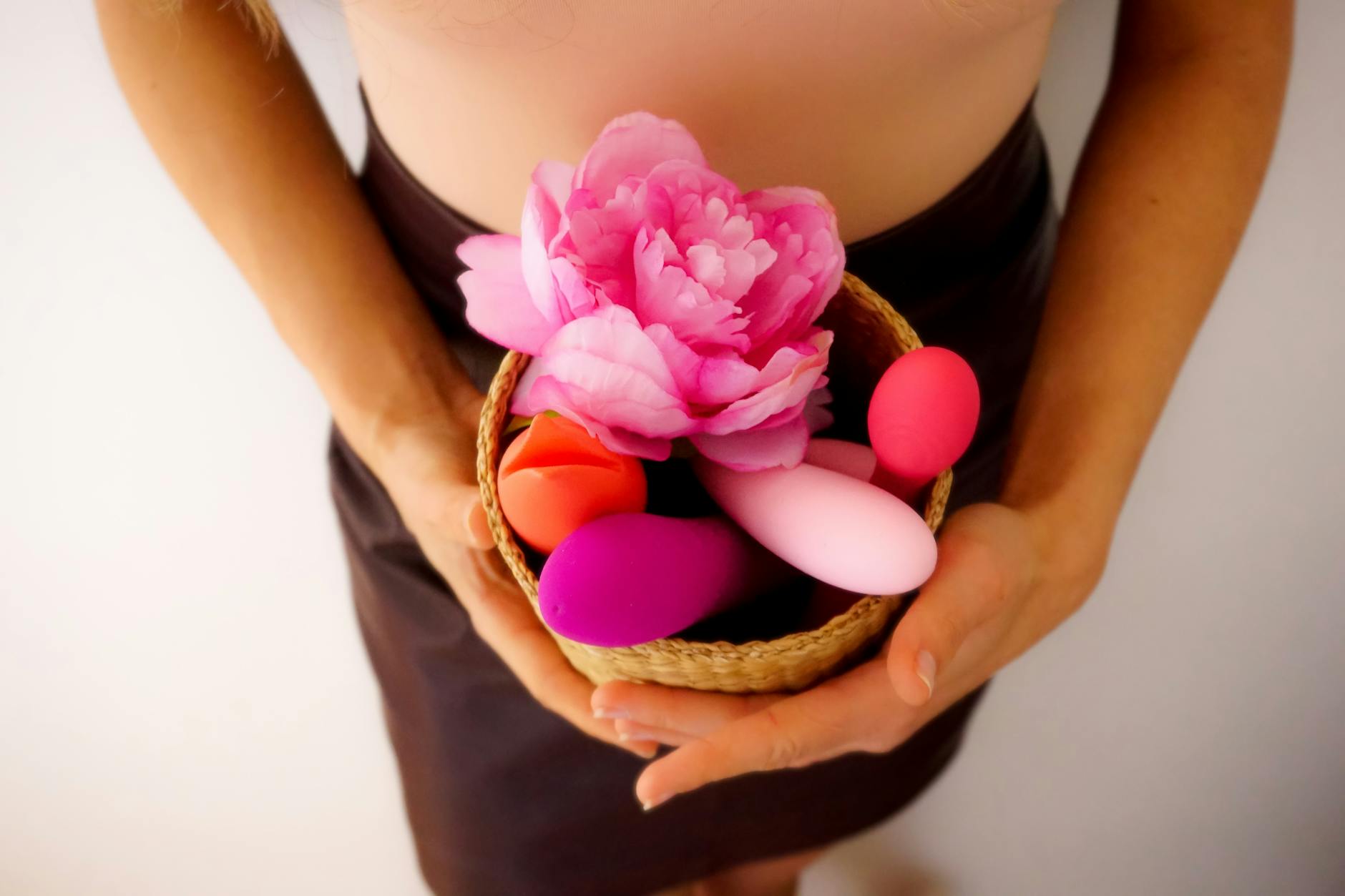
Let's talk about vulvodynia and pleasure
Vulvodynia is chronic pain in the vulva that arrives without a clear cause. Most people assume that diagnosis means the end of sexual pleasure. That's not true. It means you need different tools, more patience, and a willingness to explore sensation at a completely different pace than you might have before.
Here's what matters: the pain of vulvodynia is real and limiting. And pleasure is also still possible. Both things are true at the same time.
What vulvodynia actually changes
Vulvodynia involves ongoing pain, burning, rawness, or throbbing in the vulva. The intensity varies wildly from day to day. Some days the entire area feels oversensitive. Other days pain is localized to specific spots. This unpredictability is part of why the condition is so psychologically exhausting. Your nervous system is in a state of protective hypervigilance.
The nervous system isn't just detecting pain. It's also over-protecting the area, which means even light touch can feel threatening rather than pleasurable. This is called central sensitization, and it's the reason why gentle stimulation sometimes feels worse than no stimulation at all.
But here's the counterintuitive part: carefully designed vibration can actually help retrain the nervous system. The key is using the right intensity, the right pattern, and the right mindset.
Why lemon clitoral vibrators work for vulvodynia
Lemon vibrators have specific features that make them safer for pain conditions. First, they use suction and gentle pulsing rather than direct mechanical vibration. That's crucial. Direct vibration can feel jarring or overwhelming to an already sensitized nervous system.
Second, lemon vibrators allow you to control intensity incrementally. You can start at the lowest setting and stay there as long as you need. There's no pressure to escalate. For vulvodynia, this matters enormously because you're not competing with a partner's expectations or your own historical baseline. You're simply exploring what feels neutral or good on any given day.
Third, the suction mechanism engages the clitoral nerves without requiring direct physical pressure on tender tissue. This is particularly helpful if your vulvodynia pain includes the clitoral area, which is common.
Starting over with sensation mapping
Before you even use a lemon vibrator, you need to understand your current pain landscape. This sounds clinical, but it's actually radical self-compassion. Spend a few days noticing when pain happens. Is it worse in the morning or evening? After sex, exercise, or specific fabrics? When you're stressed? This isn't obsessive tracking. It's gathering intelligence so you can choose exploration times when your nervous system is most likely to cooperate.
When you're ready to try the vibrator, start in a low-pain window. That might mean early morning, after you've taken ibuprofen or other pain management tools, or at a time when your baseline anxiety is lower. Position yourself comfortably. You're not aiming for arousal yet. You're aiming for neutral curiosity.
The first session protocol
Approach this like you're learning a new skill, not like you're returning to something you used to do easily. Set a timer for five minutes. Place the lemon vibrator on the lowest setting. Don't put it directly on the most painful spot. Instead, start on the inner thigh or the outer labia. You're priming the nervous system that touch can be safe.
Notice the vibration without expecting it to feel good. Notice temperature, rhythm, texture. If it feels genuinely painful (not just unfamiliar), stop. There's no medal for pushing through pain here. The goal is to show your nervous system that you're in control and that you can stop anytime.
If five minutes feels manageable, do this every other day for two weeks. Don't increase intensity yet. Don't move to more sensitive areas yet. You're building tolerance and safety signaling through repetition.
When to gradually increase intensity
After two weeks of consistent, pain-free exposure, you can start small experiments. Try moving the lemon vibrator one centimeter closer to the clitoris. Keep the intensity the same. Notice. Do this for another few sessions before adjusting anything else.
Once that feels okay, try moving to pattern two on the vibrator. Stay in the same location. Again, consistency before complexity. Your nervous system learns through repetition and predictability. Variation actually increases anxiety and pain sensitivity.
If you experience pain return during this gradual progression, that's not failure. It's data. Dial back to the previous level for another week or two. Healing from vulvodynia isn't linear. It has plateaus and regressions. That's normal.
The role of mental state
Here's what doesn't get talked about enough: vulvodynia survivors often carry deep shame about their pain. You might feel like your body is broken. You might feel guilty that pleasure requires these modifications. You might feel disconnected from sexuality entirely because sex has become something that hurts.
None of that is your fault. But it does live in your nervous system, and it affects sensation. Before using a lemon vibrator, consider spending time with a therapist who specializes in pain or sexuality. You might also look into pelvic floor physical therapy if you haven't already. Often vulvodynia and pelvic floor dysfunction exist together.
The mental work and the physical work need to happen in parallel. As you're gradually increasing vibrator intensity, you're also giving yourself permission to have pleasure look different than it used to. You're honoring both the pain and the possibility.
Integration with partnership
If you have a partner, communication is everything. Let them know you're exploring sensation in a very intentional way. This isn't about them not being enough. This is about your nervous system needing a specific, controlled tool to retrain its response to touch.
Some partners want to be involved. Others feel safer stepping back. Either is fine. What matters is that you're not hiding what you're doing. Secrecy around pleasure tends to amplify both shame and pain.
After you've spent a few weeks building comfort with the lemon vibrator solo, you might invite your partner to hold it for you. This can help bridge the gap between solo exploration and partnered intimacy. But only do this if it feels right. There's no timeline here.
When pleasure returns
At some point, you might notice the vibration starting to feel good rather than just neutral. You might find yourself wanting to extend sessions beyond five minutes. You might notice you're thinking about sensation during the day instead of just thinking about pain. These are signs that your nervous system is beginning to retrain.
This doesn't mean vulvodynia is cured. It means you've found a tool that works with your body rather than against it. You might still have high-pain days where you can't use the vibrator. That's okay. The consistency is what builds the new pathway, not the perfection.
Many people living with vulvodynia tell me that lemon clitoral vibrators gave them their sexuality back. Not because the vibrator fixed their condition, but because it proved to them that pleasure was still possible. And that changed everything about how they related to their body.
When to see a specialist
If pain is severe or worsening, see a pelvic floor physical therapist or a vulvovaginal specialist. Vulvodynia sometimes has treatable contributors like yeast, contact dermatitis, or hormonal factors. Other times it's purely neuropathic. Either way, professional assessment helps.
If you're not making any progress after eight weeks of consistent exploration, talk to your doctor about topical options like lidocaine cream or compounded estrogen. These aren't replacing vibrator use. They're supporting the nervous system while you retrain sensation.
Pleasure after vulvodynia isn't about getting back to where you were. It's about discovering what feels good right now. A lemon vibrator is a tool for that discovery. The real work is patience with yourself.
People also ask
Can you use a lemon vibrator if vulvodynia pain is severe?
Not on high-pain days. But that's actually the whole point of having a vibrator available. You use it on days when your baseline pain is lower and your nervous system is more receptive. Trying to force pleasure through acute pain teaches your body that intimacy equals suffering. On high-pain days, rest and self-compassion are the right tools.
How long does it take for vulvodynia sensation to improve?
There's no standard timeline. Some people notice shifts in two to four weeks. Others take three to six months. The key is consistency, not speed. Your nervous system retrains through repetition. Sporadic exploration doesn't create the same neural changes as regular, intentional practice.
Should you use lubricant with a lemon vibrator if you have vulvodynia?
Yes, usually. Even if you have natural lubrication, a water-based lube reduces friction and creates a smoother sensation. For people with vulvodynia, reduced friction means reduced irritation. Apply lube to the vibrator, not directly to the vulva, so you can control the amount and ensure even distribution.
Can you combine lemon vibrators with pelvic floor physical therapy?
Absolutely. In fact, many pelvic floor physical therapists recommend gentle vibration as part of home practice. The vibrator helps your pelvic floor muscles learn to relax without the intensity of direct manual pressure. Coordinate with your PT so they know what you're doing at home.
What if a lemon vibrator feels too intense even on the lowest setting?
There are a few options. You can try using the vibrator through clothing. You can experiment with placing your hand between the vibrator and your skin to diffuse the sensation. You can also reach out to Shop Lemon Sexual Toy support to discuss your specific situation. Sometimes people with severe vulvodynia do better with even gentler tools while they're beginning the retraining process.
Is it normal to feel emotional when pleasure returns after vulvodynia?
Completely normal. Pleasure return often brings up grief for the time you couldn't access it, and also relief and hope. Let yourself feel all of it. That emotional release is part of the healing. If emotions feel overwhelming, a therapist can help you process them alongside the physical work.