Let's start with what's really happening
You want to use a lemon vibrator with your partner. You have one, or you're thinking about getting one. But the moment you imagine pulling it out in front of them, something tightens in your chest. Embarrassment. Fear they'll judge you. Worry that needing it means something's wrong with you or the relationship. So you don't.
Here's what I've learned from years of working with couples: that feeling is almost never about the vibrator. It's about permission. Permission to have needs. Permission to be sexual in a way that doesn't match the script you learned growing up. Permission to be seen wanting something specific.
The good news? Lemon vibrators, lemon clitoral vibrators, and other clitoral vibrators are actually brilliant tools for moving through this. Let me show you how.
Why self-consciousness shows up in the first place
Three layers usually stack on top of each other.
First, there's the cultural layer. Most of us grew up getting the message that women's pleasure is decorative. It's something that happens to you, not something you actively pursue. The idea of asking for a specific tool, with a specific sensation, feels like you're admitting to wanting too much. Like you're high-maintenance.
Second is the relational layer. If you've spent years having sex where your partner's pleasure was the main event and yours was the side dish, introducing a vibrator can feel like criticism. Like you're saying the sex you've been having isn't enough. It's not, but your brain keeps that part quiet because the alternative feels meaner.
Third is the body shame layer. Many people feel self-conscious about their vulva in general. Adding a vibrator, especially one as visible as a lemon sucker vibrator, feels like inviting scrutiny. You're worried they'll think something looks wrong or unusual.
None of this is logical. All of it is real.
The conversation before the vibrator
Using a lemon vibrator with a partner starts before you ever touch the device. It starts with talking.
Ideally, this conversation happens outside the bedroom, when you're both clothed and not aroused. Maybe over coffee. Maybe while you're driving. Somewhere the stakes feel lower.
Frame it as information about you, not criticism of them. "I've realized I really respond well to clitoral stimulation in a specific way, and I found a tool that gives me that sensation. I want to try it with you because I want to experience that pleasure with you here." Not: "I need this because what we're doing isn't working."
If your partner reacts with defensiveness or dismissal, that's information too. It often means they're scared, not that they actually object to the vibrator. Fear that they'll be replaced. Fear that they're not enough. Those feelings need attention. That's a different conversation, and it's worth having. Your pleasure isn't the problem to solve. The underlying fear is.
How to actually introduce it during sex
Start small. You don't have to go from zero to "I'm using my lemon clitoral vibrator during penetration" overnight. Try it during foreplay first. Let them watch. Let them hold it sometimes. Let them see that you're not checking out or going somewhere else when you use it. You're actually more present, more relaxed, more available to them.
The self-consciousness often dissolves faster when your partner watches you enjoy it without any weirdness from them. Their comfort gives you permission to be comfortable. But that only works if they're genuinely okay with it. If they're tolerating it with a tight jaw, you'll feel that and it'll make the self-consciousness worse.
If that's happening, pause. Go back to the conversation. "This doesn't feel like it's working for you" is fair. "What would make this easier?" is a real question to ask.

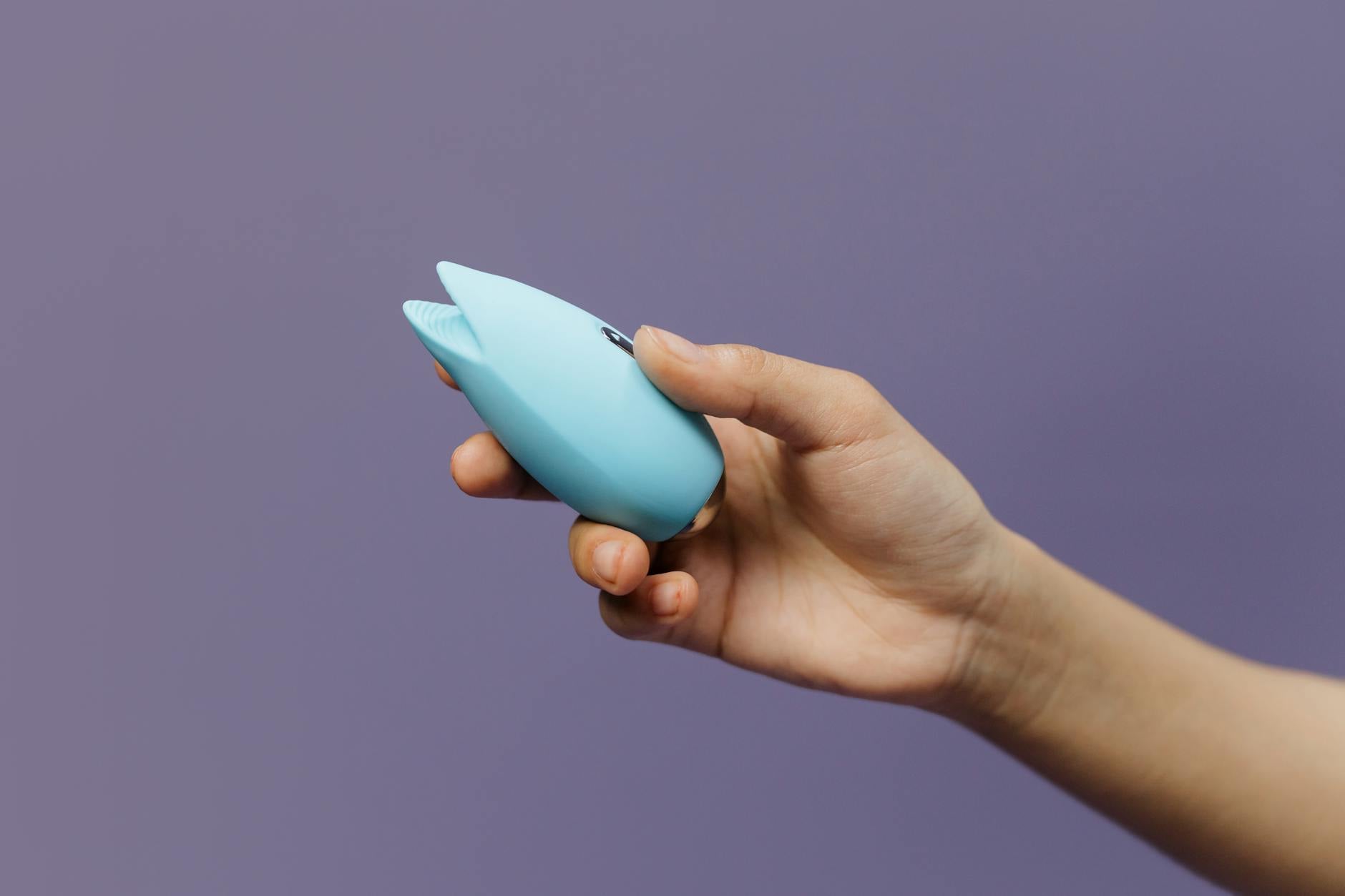
Photo by cottonbro studio on Pexels
When self-consciousness is actually a control issue
Sometimes self-consciousness is about something harder to name. You feel watched. You feel like you have to perform. You can't actually relax because you're monitoring whether they're enjoying watching you enjoy yourself.
That's not self-consciousness about the vibrator. That's anxiety about being desired for your pleasure, not just your performance. It's a sign that the relationship might need some deeper work around mutuality and genuine care.
Using a lemon sexual toy in that dynamic won't fix it. You'll just add the vibrator to the list of things you're managing for someone else's comfort.
If this resonates, the vibrator isn't the first thing to address. Your sense of safety in the relationship is. That might mean working with a therapist. It might mean having a serious conversation about what you both actually want from sex. It might mean recognizing that this relationship isn't set up for your pleasure to matter equally.
Building a shared language around what you need
Here's something useful: introducing a lemon vibrator can actually make sex with a partner easier to talk about overall.
Once you've used it together a few times, you've established that specific tools exist for specific sensations. That opens a door. Instead of "more pressure" or "slower," you can say "that pattern on the Lem felt incredible" or "I want more of that sucking sensation." Your partner learns what actually works. You get clearer on what you're enjoying. Sex becomes less of a guessing game.
Many couples find that using clitoral vibrators together takes pressure off penetrative sex too. If an orgasm from penetration alone isn't realistic for you, adding a lem vibrator makes it realistic. That changes the entire dynamic. Sex isn't about whether you can come from penetration. It's about what combination of sensations gets you there, and your partner gets to be part of creating that.
What to do if the self-consciousness doesn't lift
Sometimes you introduce the vibrator, your partner is fine with it, but you still feel weird. You use it and part of you stays frozen, watching yourself, judging yourself.
That's usually a sign that the shame runs deeper than the relationship. It's about internalized messages about what's acceptable for you to want. Those messages live in your nervous system, not just in your thoughts.
There are a few things that help: continuing to use the vibrator anyway, even when it feels awkward, because your body eventually learns that wanting pleasure isn't dangerous. Reading erotica or listening to audiobooks written from a woman's pleasure perspective, because it rewires what you think sex is supposed to sound and feel like. Talking to a therapist who specializes in sexual health. Watching how your partner actually responds when you're aroused and asking for what you want, because most of the time they're relieved and more interested, not judgmental.
Self-consciousness doesn't disappear overnight. But it does disappear if you're willing to stay with the discomfort long enough for your nervous system to catch up to what your mind already knows: you deserve to feel good.
The difference between shy and unsafe
Last important thing: self-consciousness and unsafeness are not the same.
Being shy about using a lemon sucker vibrator with your partner is normal. Being with someone who makes you feel unsafe for wanting pleasure is not normal, and no vibrator is going to fix that.
If you're self-conscious because you're ashamed of wanting something, that's worth exploring. If you're self-conscious because your partner has made you feel bad for wanting things, or because they've shown you they can't be trusted with your vulnerability, that's a different problem. The answer isn't to hide the vibrator. It's to address the relationship.
You're allowed to want a partner who's genuinely excited about your pleasure. You're allowed to use tools that help you get there. You're allowed to take up space in your own sex life.
Start with yourself. Then bring the conversation to them. Then bring the vibrator. The order matters.
People also ask
Should I tell my partner I want to use a lemon vibrator before we have sex?
Yes. Introducing it mid-sex without a conversation first tends to create the exact self-consciousness you're trying to avoid. It also puts your partner in a position of surprise, which often reads as a lack of trust. A quick conversation beforehand, even five minutes, sets everyone up for less awkwardness and more actual pleasure.
What if my partner says no to using lemon clitoral vibrators during sex?
That's worth understanding. Ask why. Sometimes it's genuine discomfort, sometimes it's fear of inadequacy, sometimes it's a difference in sexual values you haven't discussed yet. If their "no" is firm and unchanging, you get to decide what that means for you. Can you live with sex the way it is? Do you need to explore this elsewhere? Does this reveal something bigger about the relationship that needs attention? Those are real questions, not tests.
Can I use a lemon vibrator during sex if I've never used one alone first?
Sure, but it's easier if you don't. Using a lem vibrator by yourself first means you know what sensations you actually like, what patterns feel good, how much pressure works for you. Then when you introduce it with a partner, you're not also learning the vibrator at the same time you're managing self-consciousness. One learning curve is enough.
Is using a vibrator with a partner a sign the relationship is in trouble?
No. It's usually a sign the relationship is mature enough to include honesty about what actually feels good. The healthiest couples I know use vibrators together. They talk about their bodies. They're willing to problem-solve around pleasure. A vibrator isn't a Band-Aid on a broken relationship. It's a tool that works best in a relationship where both people actually care about the other person's experience.
How do I stop feeling embarrassed during sex if I'm using a lemon sexual toy?
Gradually. Start by using it during foreplay when there's less performance pressure. Let your partner see you enjoying it without commentary. Notice that nothing bad happens. Your nervous system eventually learns that pleasure is safe. You can also try closing your eyes, focusing on sensation instead of observation, or asking your partner to be close to you while you use it, so you're connected instead of separated.
What if I feel more self-conscious with a partner than I do using lemon vibrators alone?
That's telling you something about the relationship or about your attachment style. Some people feel safer alone because alone means no judgment. If that's you, the work is building safety with another person. That might mean slower introduction, more conversation, a partner who actively celebrates your pleasure, or therapy to understand where the need for total control comes from. All of those are worth exploring.
You don't have to choose between pleasure and peace
Using a lemon vibrator, a lem vibrator, or any clitoral vibrator with a partner doesn't mean sacrificing the feeling of being safe or relaxed. It means expanding what safety and relaxation can include.
Self-consciousness is information. It tells you something needs attention. Sometimes it's about the vibrator. Usually it's about permission, about shame, about whether you truly believe your partner is on your team. Once you know which one it is, you can actually do something about it.
Your pleasure matters. Not as a luxury, not as something you earn through being the perfect partner or the perfect body. It matters because you matter. A lemon clitoral vibrator is just a tool that reminds your body and your nervous system of that truth. Your partner using it with you, enthusiastically and without reservation, is them showing you they believe it too.
That's worth the conversation. That's worth the awkwardness. That's worth moving through the self-consciousness to get there.