Let's talk about the thing nobody wants to admit
You've met someone amazing. Things are moving fast in exactly the right way. And somewhere in there, you're thinking about bringing a toy into the picture. Then immediately you're terrified you've just made it weird in your head.
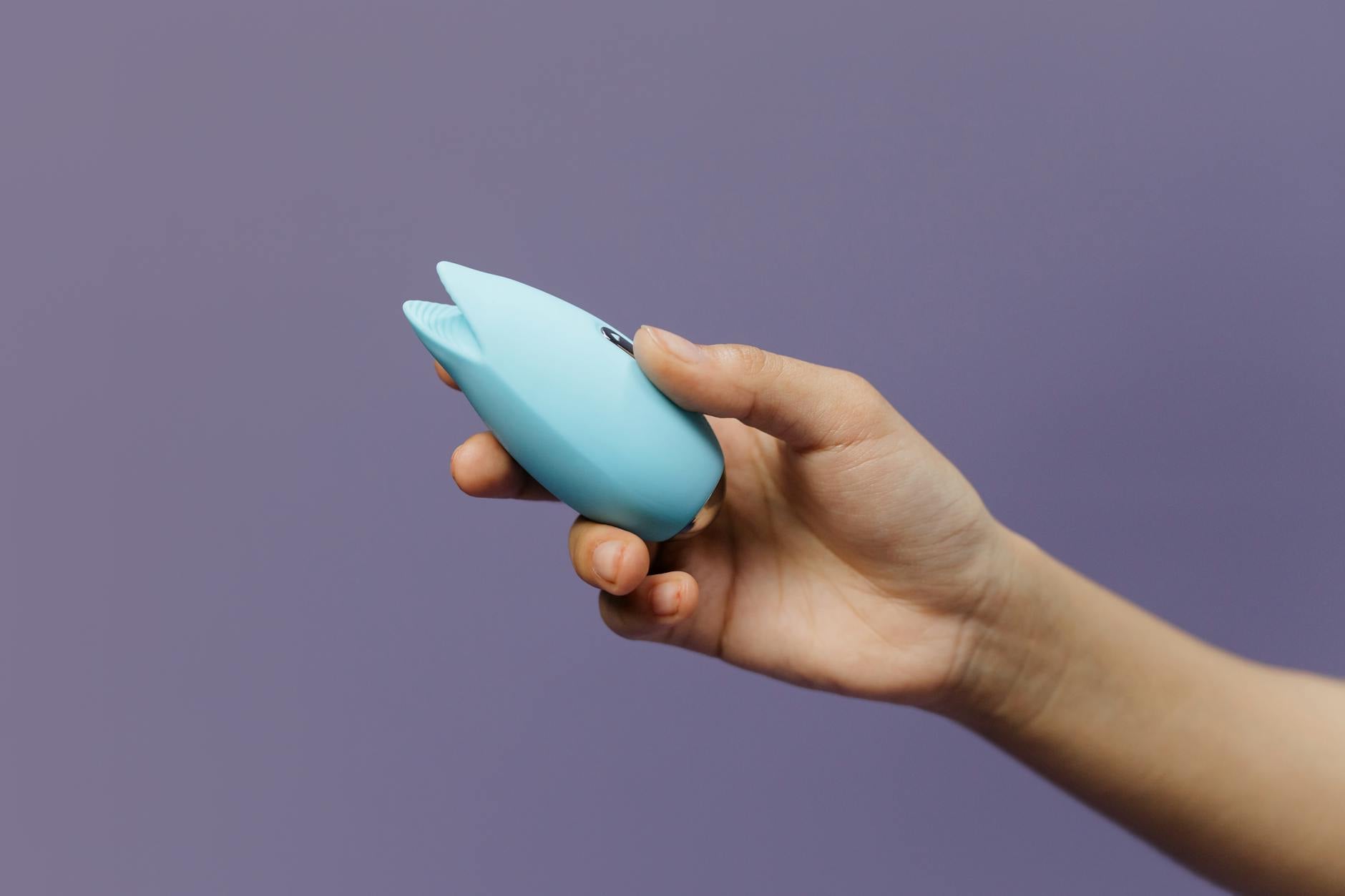
Here's what I've learned from years of couples work: the anxiety about introducing lemon vibrators or any clitoral vibrator early in a relationship isn't about the toy. It's about fear that your partner will think you're not satisfied, or that asking means something's wrong, or that toys belong in some other category of relationship than the one you're building right now. None of that is true.
The real thing that's happening
You're not actually worried about a sex toy. You're worried about vulnerability. You're worried that naming desire out loud—especially something as specific and focused as "I want us to try this together"—will fracture something that still feels fragile. And that's fair. New relationships are tender. They're also resilient in ways you don't realize yet.
Introducing something like a lemon clitoral vibrator into early-stage intimacy can actually deepen things faster than keeping it off the table entirely. Here's why: talking about pleasure specifically, without judgment, is one of the fastest ways to build real trust. You're not asking permission. You're inviting collaboration.
How to actually bring it up (without it feeling like a performance)
Don't plan a speech. Don't dim the lights and create a "moment." The best conversations about toys happen the way the best conversations about anything happen: naturally, when you're both relaxed, usually not in bed.
Three approaches, depending on your vibe:
"I've been thinking about trying..." This is the direct route. You're in the car, or on the couch, or over coffee. "I've been thinking it could be fun to try using a vibrator together. Something like a lemon vibrator. Would that be something you'd be into?" Boom. You've said it. You've named it. Now you wait for them to respond, and you don't fill the silence.
The show, don't tell. You're scrolling together, a shop lemon sexual toy ad pops up, and instead of scrolling past you pause. "Have you ever tried anything like that?" Let them answer. Their response tells you everything about their comfort level and curiosity.
The framing as shared exploration. "I want to learn what feels good for both of us. I've been reading about clitoral vibrators, and some people say it's actually hotter to explore that kind of thing together from the start of a relationship instead of pretending it doesn't matter." This reframes it from "I need this" to "I want us to be this kind of couple."
Whichever you choose, keep it short. Let them ask questions. Don't oversell it.
What happens if they get weird
Some people will hesitate. They might feel like it's a reflection on their capacity to satisfy you. That's not your job to fix immediately, but it's worth addressing.
"I'm not asking because you're not enough. I'm asking because exploring together is hot to me. There's a difference." Full stop.
Some people will say "maybe later." That's fine too. You've named it. It's in the room now. Later will come faster than you think, and when it does, it won't feel like you're forcing anything.
If they're genuinely into it, here's what helps
Start with lower expectations. The first time using a lemon clitoral vibrator together doesn't have to be some transcendent experience. It probably won't be. You're both paying attention to the toy, to each other, to the novelty of it. That's a lot of cognitive real estate. Just let it be what it is.
Use it solo first. Not in front of them, necessarily, but know how it feels, what pattern you like, what pressure works. When you're in bed together, you're not learning the toy and learning your partner at the same time. You already know you.
Let them watch without needing to participate yet. When your partner watches for the first time is actually its own erotic experience. You don't have to integrate them into every use case immediately. Sometimes they watch. Sometimes they use it on you. Sometimes you use it and they're just close by. All of that builds comfort.
Communicate in the moment. "Faster" or "stay there" or "I want to try this other pattern." Keep talking. Not in a clinical way, but keep it alive. Your partner knowing exactly what you want is the whole point.
The emotional layer matters more than the physical one
Here's what's actually happening when you introduce a lemon vibrator early in a new relationship: you're telling your partner that pleasure matters, that you have specific desires, that you trust them enough to be honest about what you want, and that you want them to be in on it. Those are enormous relationship signals.
I've watched couples skip the vulnerability of asking for things they want and then spend years frustrated in bed. I've also watched couples have one awkward conversation about toys in week six of dating and then build a decade of genuine sexual trust off that single act of honesty.
The toy is almost incidental. The conversation is everything.
When to know it's the right move
You're ready to introduce a clitoral vibrator into a new relationship when: you've been together long enough that you're seeing each other naked, you've had one or two conversations about sex, and you can imagine your partner having a positive reaction (not necessarily yes immediately, but not disgusted).
You're probably not ready if you've only been together three weeks and haven't talked about pleasure at all yet. Build a little foundation first.
If things feel stalled after you ask
Sometimes the toy conversation opens a bigger conversation about mismatched comfort levels or different approaches to intimacy. That's not a bad outcome. That's clarity. Some couples find that introducing pleasure toys into their dynamic helps them reconnect, even when the start feels tentative. If your new partner is hesitant, it might be worth exploring why. Is it discomfort with toys specifically, or discomfort with the conversation itself? Is it a faith thing, a past relationship thing, a body image thing? Understanding the real block helps you know whether it's something to push gently, something to accept, or something that's actually revealing incompatibility.
That's not fun. But it's useful to know early.
The aftermath
Once you've introduced a lemon clitoral vibrator into your new relationship, something shifts. You've named desire. You've acted on it. You've done something a little bit brave together. That's the memory that sticks. Not the mechanical details of the first time, but the fact that you could ask, they could answer, and something good came out of the honesty.
Most couples I work with tell me that the scariest part was the asking. The actual experience? It was fine. Sometimes great. Sometimes just... normal. But the trust you build by having the conversation is the thing that matters.
So if you're sitting with this anxiety right now, just know: that voice telling you it's too soon, too weird, too much? It's trying to protect you. But in this case, the real protection is honesty.
People also ask
What if we've been together three months and haven't talked about pleasure toys yet?
There's no expiration date on bringing it up. Three months, three years, doesn't matter. If you want to introduce lemon vibrators into your relationship now, you can. The conversation gets easier the longer you've been together because you already know how to fight fair and listen to each other. Use that skill.
Is it weird to bring toys into a relationship this early?
Not even a little bit. Lots of couples explore pleasure toys in the first few months of dating. In fact, some relationships benefit from that openness early—it sets a tone that pleasure matters and that you can talk about what you want. Does it feel early to you? That's the only opinion that matters.
What if they say no and I feel rejected?
A no to "do you want to explore this toy with me" is not a no to you. It might be a no to toys in general, a no to that specific moment, or a no that needs more conversation. Ask them what's underneath it. "I'm hearing no. Help me understand what you need." Often what comes next is actually connection, not rejection.
How do I introduce a lemon clitoral vibrator without sounding like I'm asking permission?
You're not asking permission. You're inviting collaboration. "I want to try this" is stronger than "Is it okay if..." Your pleasure and your desire to explore aren't things you need permission for. You're offering your partner the opportunity to be part of it. There's a difference.
What if we try it and it doesn't feel good?
Try a different pattern, a different setting, different timing. Try it separately and come back to it. Or just decide it's not your thing and move on. One awkward attempt at using a lemon vibrator doesn't derail a relationship. What matters is that you tried something together. That's the win.
Is there a best time in a new relationship to introduce toys?
After you're comfortable being naked together, before you develop rigid routines around sex. Somewhere in the first two to six months. Any later and it can feel like you're asking them to change something that feels settled. Any earlier and you might not have enough trust built yet to weather any awkwardness. Right in that sweet spot, when things are still new enough to feel like exploration, is when it lands best.
The bottom line
Introducing lemon vibrators or any clitoral vibrator into a new relationship is less about the toy and more about telling your partner that you're someone who knows what you want and trusts them enough to say it out loud. That's the real turn-on. The vibrator is just the vehicle for that conversation.
If you're thinking about it, you're probably ready. Have the conversation when you're both relaxed. Keep it simple. Listen to what they say. And remember: the scariest part happens in your head before you ask. After you ask, it's just two people being honest with each other.
That's worth it every single time.