
Here's what nobody tells you about long-term desire
It doesn't disappear. It gets quiet. There's a difference. After years with the same partner, your nervous system stops treating sex as novel and dangerous and interesting. Your body has mapped every move, every touch, every angle. Predictability is restful. It's also, sometimes, boring.
That's not a sign your relationship is broken. It's a sign you've mastered the basics. The good news: mastery is the foundation for actually deepening pleasure. Most couples never get there because they confuse routine with deadness. They're not the same thing.
Why novelty matters more than you think
Research on long-term couples shows something counterintuitive. The couples reporting the strongest sexual satisfaction aren't the ones having the most sex or the newest variations. They're the couples who've deliberately introduced elements that feel slightly foreign or uncertain. This doesn't mean extreme kink or wild experimentation. It means anything that disrupts the automatic pilot.
Introducing a lemon clitoral vibrator into your routine does something specific neurologically. For the partner receiving stimulation, it shifts from familiar hand or mouth to a sensation their body hasn't learned yet. For the partner giving, it removes pressure to perform in exactly the way they've always performed. Both get permission to drop the autopilot.
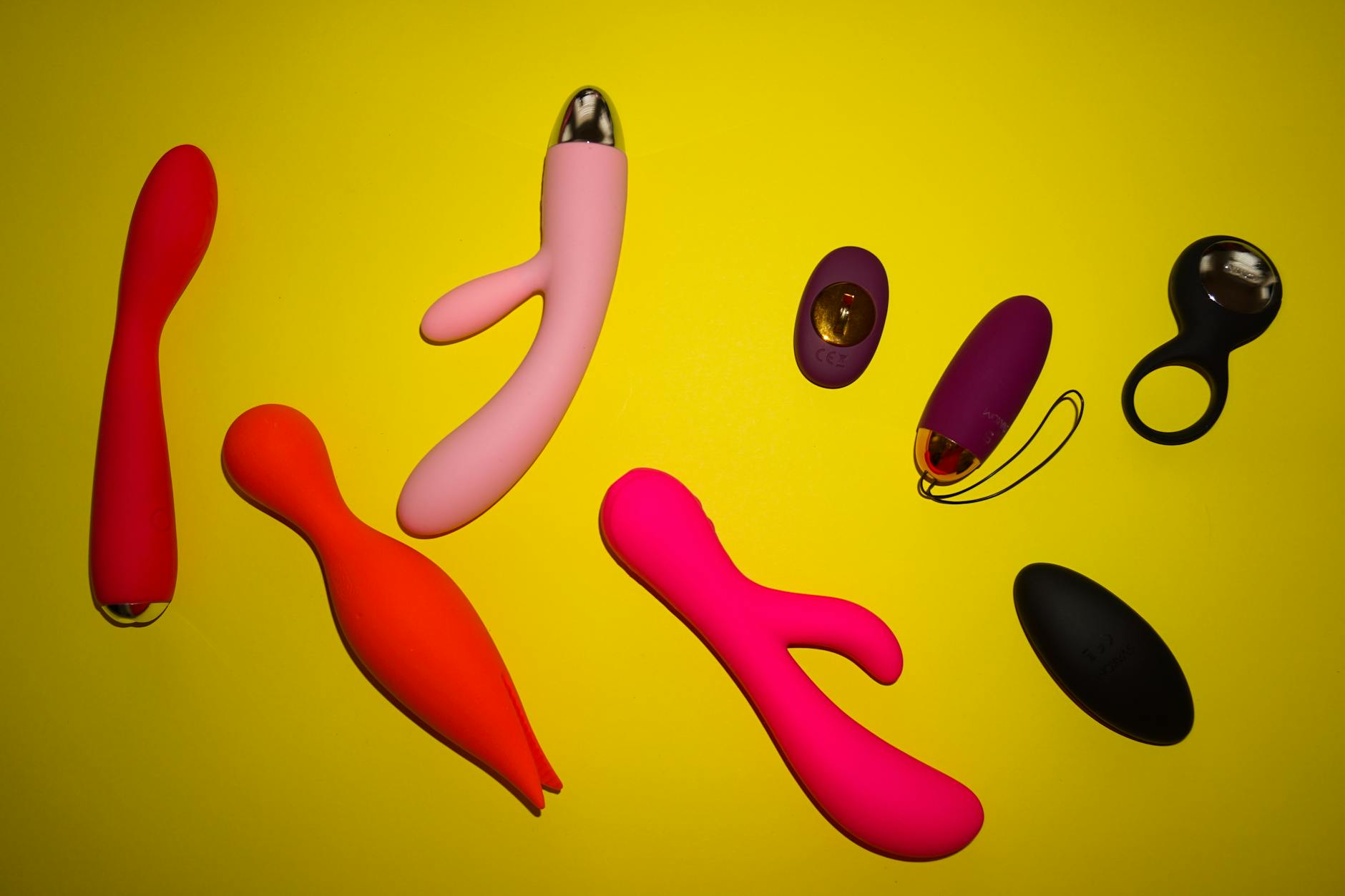
Photo by FounderTips on Pexels
The specific vulnerability that helps
Let's be honest. After years, you've both become a little territorial about how you prefer things. You know what works. You've probably never explicitly stated it, but you both know. Introducing a toy breaks that silent agreement. You have to talk about it. Not in a clinical way. In a "this feels interesting, try this setting, what does that feel like" way. The conversation itself rebuilds intimacy.
For couples who have fallen into a pattern where sex happens the same way, at the same time, with the same rhythm, this is revolutionary. You're not rearranging furniture in a room you've memorized. You're rediscovering the room together. One person gets to experience their partner's genuine curiosity again. The other gets to feel their partner's arousal in a way that isn't automatic.
This is what I've seen change everything for long-term couples in my practice. Not the toy itself. The fact that the toy required a conversation.
How to actually introduce it (without it being weird)
Timing matters. Not during sex. Before sex. Sit down, or don't sit down, but pick a moment when you're both calm and actually available to think. "I've been reading about lemon vibrators. They seem like they could feel different for us. Interested in trying one?" Most partners say yes when they feel genuinely asked, not ambushed.
Pick your setting. If you're someone who feels self-conscious, start when you have privacy and time. Saturday morning, not Tuesday night when you're both exhausted. The first time using any new vibrator should feel exploratory, not rushed.
Let the receiving partner lead. Here's what usually happens: the partner with the vibrator gets excited and goes straight to high intensity. The receiving partner tenses because it's unfamiliar. Start at the lowest setting. Let them guide the pattern. "That felt good, go higher" is different from you deciding what they want.
Lemon clitoral vibrators like the Lem are designed with patterns that shift between gentle and more intense, which gives you room to explore gradually. You're not jumping to maximum sensation. You're discovering what this feels like for your particular body, with your particular partner.
What changes when you've been together for years
Here's what I observe clinically. After years together, partners often become less sensitive to subtle changes in each other. You're both a little less present because you've both been present for so long. A new sensation interrupts that autopilot. Suddenly you're both more attentive.
You're also, after years, often more forgiving of awkwardness. You don't need it to be perfect. You can laugh if the vibration feels weird on your hip bone. You can stop and try something else. That permission to be imperfect is what allows real exploration. New couples are often too nervous to adjust mid-stream. Long-term couples can. That's an advantage.
Many couples also find that after introducing a vibrator, they become more comfortable asking for other things. Not because the vibrator is magic. Because they've demonstrated that they can adjust. That they're still curious. That sex doesn't have to stay frozen in the shape it's been.
The specific role of lemon sexual toys in rebuilding sensation
For people who've been with the same partner for years, numbness is real. Not medical numbness, but sensory numbness. Your body has learned the expected touch pattern. It doesn't spike adrenaline anymore. A lemon clitoral vibrator resets that partly because suction-based stimulation works differently than fingers or a traditional vibrator. It's not just faster. It's a different nerve pathway entirely.
That's why people often report that lemon vibrators unlock sensations they didn't know were available. The Lem, for instance, uses air pulse technology that stimulates nerves without the direct friction that can feel numb after years of the same pattern. It's like your body suddenly remembers how to feel surprised.
For the partner giving pleasure, watching their long-term partner respond strongly to something new is its own aphrodisiac. You get to see them lit up in a way you haven't seen in months or years. That matters for the giver's sense of desire too.
When you should both read the instructions
Don't be shy about this. Go through the manual together. Lemon clitoral vibrators come with settings and patterns that most couples won't discover if they're just fumbling. You're not admitting you need help. You're gathering information. "Okay so there's a rhythm setting and a pulsing setting, which one are you curious about?" That's foreplay now.
The conversation after
This matters as much as the moment itself. Afterward, ask each other what you noticed. Not "did you like it" like you're filling out a survey. More like "what felt different" or "what would you want to try next time." These are the conversations long-term couples have stopped having about sex. Reopening them, even briefly, is the actual bridge.
If it doesn't land perfectly the first time, that's normal. Introducing anything new takes adjustment. Your body has neural pathways it's been following for years. A lemon vibrator asks it to rewire slightly. That takes maybe three or four tries before it feels natural. That's not failure. That's integration.
FAQ: Long-term couples and vibrators
Will using a vibrator make my partner feel less needed?
Not if you're using it together. The vulnerability and communication required to introduce a toy actually deepens interdependence. You're both saying "I want this to feel good for you, and I'm willing to learn new ways to make that happen." That's the opposite of less needed.
How often should we use a vibrator if we've been together for years?
There's no rule. Some couples use it once a week, some once a month, some whenever they want to intentionally shift out of routine. Think of it less like a regular medication and more like date night. It's a deliberate choice to invest in pleasure together.
What if my partner is resistant?
Curiosity works better than persuasion. "I'm interested in trying this because I want us to feel more present with each other" lands differently than "our sex life is boring." Resistance often comes from the same place as shyness. Give them time. Don't make it feel urgent or like you're unhappy. Frame it as exploration, not rescue.
Can lemon clitoral vibrators work if we've lost physical attraction?
A vibrator can't rebuild genuine attraction that's gone. But if you're both still interested in each other and the spark has just gotten quiet, tools like lemon sexual toys often help. They reactivate sensation and communication. The attraction usually follows that.
Do I need to use maximum intensity for it to work?
Absolutely not. Many people find their sweet spot at medium intensity. Lemon vibrators let you adjust. Lower intensity is often more sustainable anyway. You're not chasing bigger, you're chasing different.
What if using a vibrator makes us feel like we're admitting something is wrong?
You're admitting something is true: you want pleasure to stay alive in your relationship. That's the opposite of wrong. Long-term couples who stay sexually engaged often use some form of external stimulation. It's not a Band-Aid on a broken thing. It's maintenance on a thing worth maintaining.
The real shift
After years with the same partner, introducing lemon clitoral vibrators isn't about the toy. It's about the conversation it forces and the permission it gives both of you to stop autopilot. Your nervous system is expecting one thing. Suddenly it gets something else. Suddenly you're both paying attention again.
Most long-term couples don't need a relationship overhaul. They need permission to play again. To be curious again. To acknowledge that routine is comfortable and also sometimes something worth disrupting. That's what a lemon vibrator can start. The rest is up to you and your partner, one conversation and one sensation at a time.
Ready to explore what's possible? Talk to our team at Shop Lemon Sexual Toy about what might work best for your situation.