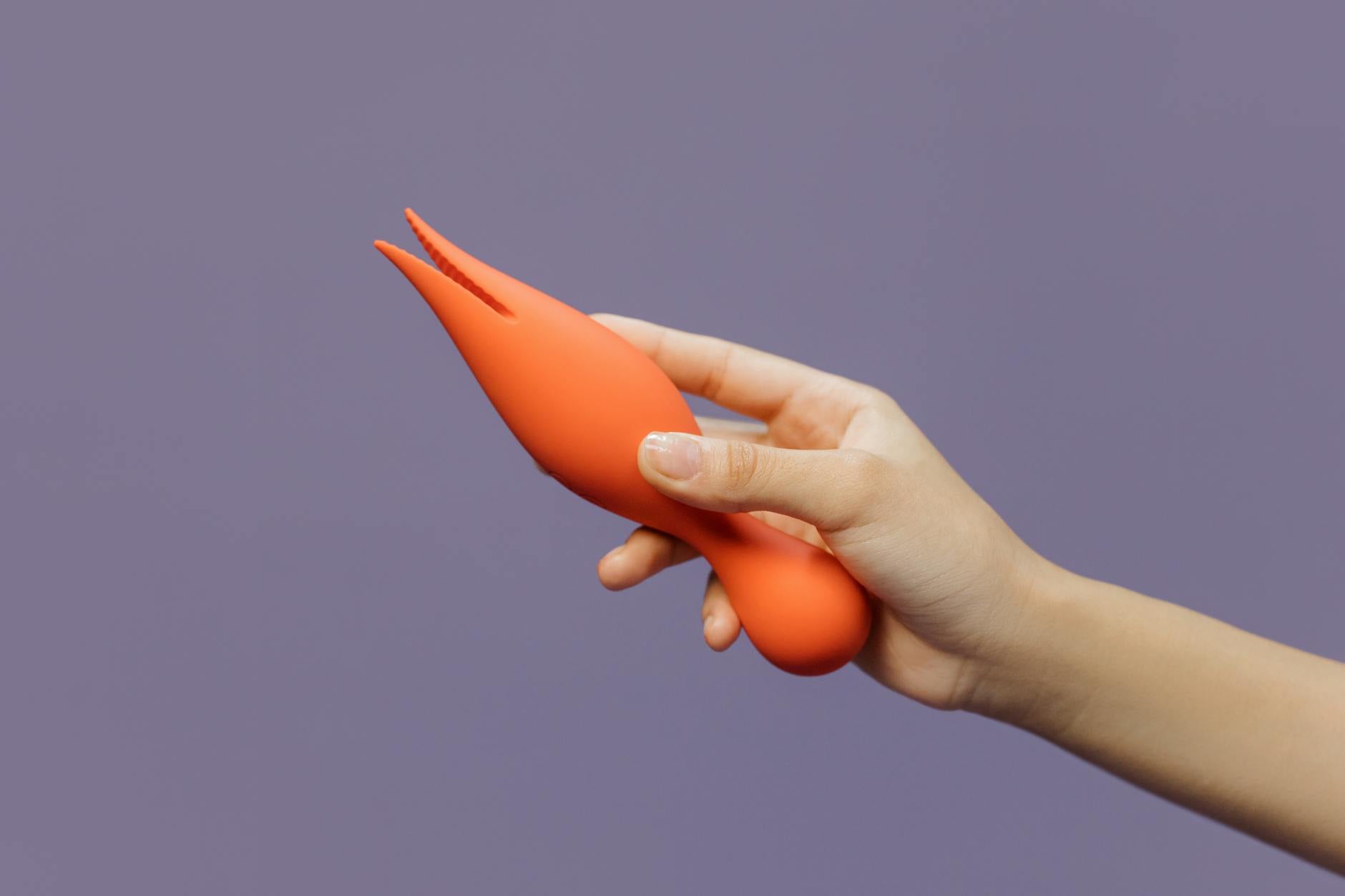
Here's the thing about stress and arousal
You're not broken. Your lemon vibrator isn't broken. But when you're anxious, your whole nervous system is basically in lockdown mode, and pleasure is nowhere on the priority list.
Stress and arousal use the same neural real estate. You can't have both running at full volume at the same time. When cortisol spikes, dopamine drops. When your shoulders live up by your ears, your pelvic floor tightens. When your brain is stuck in a loop about deadlines or finances, the clitoral vibrator you usually love feels like it's working, but you're not really there.
What stress actually does to your body
Let's get into the mechanics. When you're stressed, your sympathetic nervous system takes over. That's the fight-or-flight system. It's brilliant for running away from danger. It's terrible for having an orgasm.
Here's what happens: Your blood gets diverted away from your genitals and toward your major muscle groups. Your breathing gets shallow. Your pelvic floor muscles tense up instead of relaxing. The vaginal tissues produce less natural lubrication. And your brain stops releasing the neurochemicals that build arousal.
You could use the best lemon clitoral vibrator on the market, and your body still won't cooperate because your nervous system is literally blocking the signal. This is why "just relax" is the worst advice anyone could give. You're not being lazy. Your body is doing exactly what evolution designed it to do.
The timing problem: why it takes longer
Arousal normally builds in stages. With a lemon sucker or any quality clitoral vibrator, most people can move from zero to engaged in maybe 10-15 minutes. But when stress is active, the timeline gets longer. Sometimes way longer.
Why? Because you have to first shift your nervous system out of fight-or-flight and into parasympathetic mode. That's the rest-and-digest system. Only then can pleasure start building. So you're not just waiting for arousal to happen. You're waiting for your body to feel safe enough to even try.
This is where a lot of people get frustrated with their lemon vibrators. They think the device isn't intense enough. They turn up the intensity. But intensity won't fix a nervous system that's in lockdown. If anything, it can feel overwhelming or jarring.
How your brain responds differently under stress
The prefrontal cortex is basically the pleasure-positive part of your brain. It's where anticipation lives, where you think about what you want, where arousal gets conceptually interesting. Under stress, blood flow drops to your prefrontal cortex. Your amygdala (the threat-detection center) gets louder instead.
So even if you're touching yourself or using your Hello Nancy lemon vibrator, your brain is half-listening. Part of you is still thinking about the email you didn't send, or the conversation that went wrong, or the bill sitting on the desk. That divided attention is real. It's not a personal failing.
The good news: you can train your nervous system to shift. It takes intention and practice, but it works.
What actually helps: the nervous system reset
Four things I recommend to clients who are dealing with stress-blocked arousal.
First, plan it. Don't try to squeeze pleasure into a gap between tasks. Block 30-45 minutes when you know you're unlikely to be interrupted. The anticipation alone helps your nervous system shift.
Second, warm up your nervous system before you warm up your body. This means: 5-10 minutes of deep breathing, a warm bath, a walk, stretching, or even just sitting quietly. Your goal is to drop your heart rate and activate parasympathetic tone. Then you move to touch.
Third, start low and slow. When you pick up your lemon vibrator, begin on the lowest setting. Let your body remember what pleasure feels like before you ask for intensity. Your clitoral vibrator isn't going anywhere. Patience changes everything.
Fourth, have a grounding ritual. Some people light a candle. Some put their phone in another room. Some put on a specific song. You're creating a signal to your nervous system that this time is different. This is safe.
The role of your pelvic floor
Your pelvic floor muscles are stress sensors. When you're anxious, they clench. A tight pelvic floor makes sensation feel muted, even when using a lemon clitoral vibrator. Orgasms feel harder to reach or less intense.
So before you reach for your vibrator, consider a pelvic floor release. This sounds fancy but it's simple: deep breaths, and on the exhale, consciously relax those muscles. Some people find that lying on their back with a pillow under their knees helps. Others do child's pose or pigeon pose. The goal is to signal to your pelvic floor that it's okay to let go.
Once that tension releases, everything changes. The same lemon vibrator suddenly feels more connected, more pleasurable, more responsive.
Why intensity might feel different under stress
When you're stressed, high-intensity stimulation can feel jarring instead of pleasurable. Your nervous system is already in overdrive. Adding a super-intense lemon sucker can feel like cranking the volume when you're already overstimulated.
This is why lower intensity often works better during stressful periods. It gives your nervous system permission to gradually engage instead of firing everything at once. And it means you're more likely to actually stay present instead of waiting for it to feel good.
Building a stress-aware pleasure practice
If you deal with chronic stress, consider building pleasure into your self-care routine rather than treating it as a separate thing. This might mean: using your Hello Nancy lemon vibrator once or twice a week, always in a dedicated time and space, always with some nervous-system prep beforehand.
Over time, your nervous system learns to recognize the signals. The warm water, the quiet space, the specific vibrator. Your body starts to downshift into parasympathetic mode faster. Arousal becomes more accessible.
You're not fighting against your biology. You're learning to work with it.
Common questions people don't ask but should
Is it normal for stress to completely kill arousal? Completely normal. Stress literally redirects blood flow away from your genitals. This is not weakness. This is physiology.
Should I try harder when my lemon vibrator isn't working? No. Trying harder usually makes it worse because it adds performance pressure, which adds stress. Back off. Breathe. Come back when your nervous system is calmer.
Will my body ever feel responsive again? Yes. Nervous systems are plastic. You can retrain yours. It takes consistency, but it works.
FAQ
Why does my clitoral vibrator feel numb when I'm anxious?
Stress diverts blood flow away from your genitals and toward your major muscle groups. Less blood flow means less sensation. Add in a tight pelvic floor, and your lemon vibrator's stimulation feels distant instead of intimate. The solution is nervous system reset before pleasure, not more intensity.
Can I use a lemon sucker on the highest setting if I'm stressed?
Technically yes, but it usually backfires. High intensity on an already-overstimulated nervous system can feel jarring or numb. Start at level 1-2 and let your body gradually engage. You'll get better results and feel more pleasure, not less.
How long does it take for arousal to come back after a stressful day?
It depends on how stressed you are. If you're just mentally busy, 15-20 minutes of nervous system prep gets you there. If you're dealing with something heavy, you might need 30-45 minutes. Don't fight it. Work with your timeline.
Is my lemon vibrator the problem if I'm not feeling it?
Unless the device is actually broken, probably not. Your nervous system is the issue. A cheap vibrator under low stress often feels better than an expensive one under high stress. The device matters, but your parasympathetic tone matters more.
Should I do kegels when I'm stressed before using my clitoral vibrator?
No. Kegels tighten your pelvic floor. When you're stressed, you need to relax it. Save the kegels for when you're calm. Under stress, focus on releasing instead.
What's the difference between stress-blocked arousal and low desire?
Stress-blocked arousal is temporary and situation-specific. You usually feel desire, but right now, under this stress, it's gone. Low desire is broader and more persistent. If stress is causing the block, fixing your nervous system often fixes the desire. If desire itself has faded, that's a different conversation worth having with a professional.
The actual takeaway
Your lemon vibrator isn't less effective when you're stressed. Your nervous system is just running a different program. The fix isn't a better toy or more intensity. It's permission, time, and a nervous system that feels safe enough to engage.
Stress and pleasure literally can't coexist. So the work isn't fighting harder for arousal. It's creating the conditions where arousal can happen at all. Once you understand that, everything shifts. And yes, your body can feel good again. It just needs the setup to get there.
If you're dealing with persistent blocks to pleasure or desire, even outside of stress, talking to a therapist or relationship specialist can help. You deserve to feel good. That's not a luxury. That's a baseline.
For more on how your body responds to different conditions, read about why lemon vibrators feel different at different arousal levels and how to use lemon vibrators as a beginner for foundational techniques that work with, not against, your nervous system.