Let's start with the obvious problem
You bought a lemon vibrator. You set aside time. And then... nothing. Or worse, everything feels numb, irritating, or weirdly distant. Your brain is screaming "this should feel good" while your body is basically playing dead. So you're left wondering if you broke something, or if the toy just isn't for you.
Here's what's actually happening. Your nervous system isn't malfunctioning. It's protecting you. And once you understand that, you can work with it instead of fighting it.
The nervous system connection no one talks about
Your ability to feel pleasure isn't just genital. It's neurological. When you're stressed or anxious, your nervous system shifts into what therapists call a sympathetic state (fight-or-flight mode). In that state, your body is literally primed for survival, not sensation. Blood moves away from your skin and toward your large muscles. Your pelvic floor tightens. Your vaginal tissues become less sensitive. Your brain's reward circuitry dims.
This isn't weakness. It's your nervous system doing exactly what it evolved to do. But it means that a lemon clitoral vibrator that felt incredible last week might feel completely underwhelming today, even though nothing changed about the toy itself.
The research backs this up. Cortisol (your stress hormone) directly suppresses sexual response. Studies show that people with high cortisol have significantly reduced genital blood flow and slower arousal. Your nervous system essentially says: "Not now. Not safe enough." And your body listens.
Why lemon vibrators specifically show this more clearly
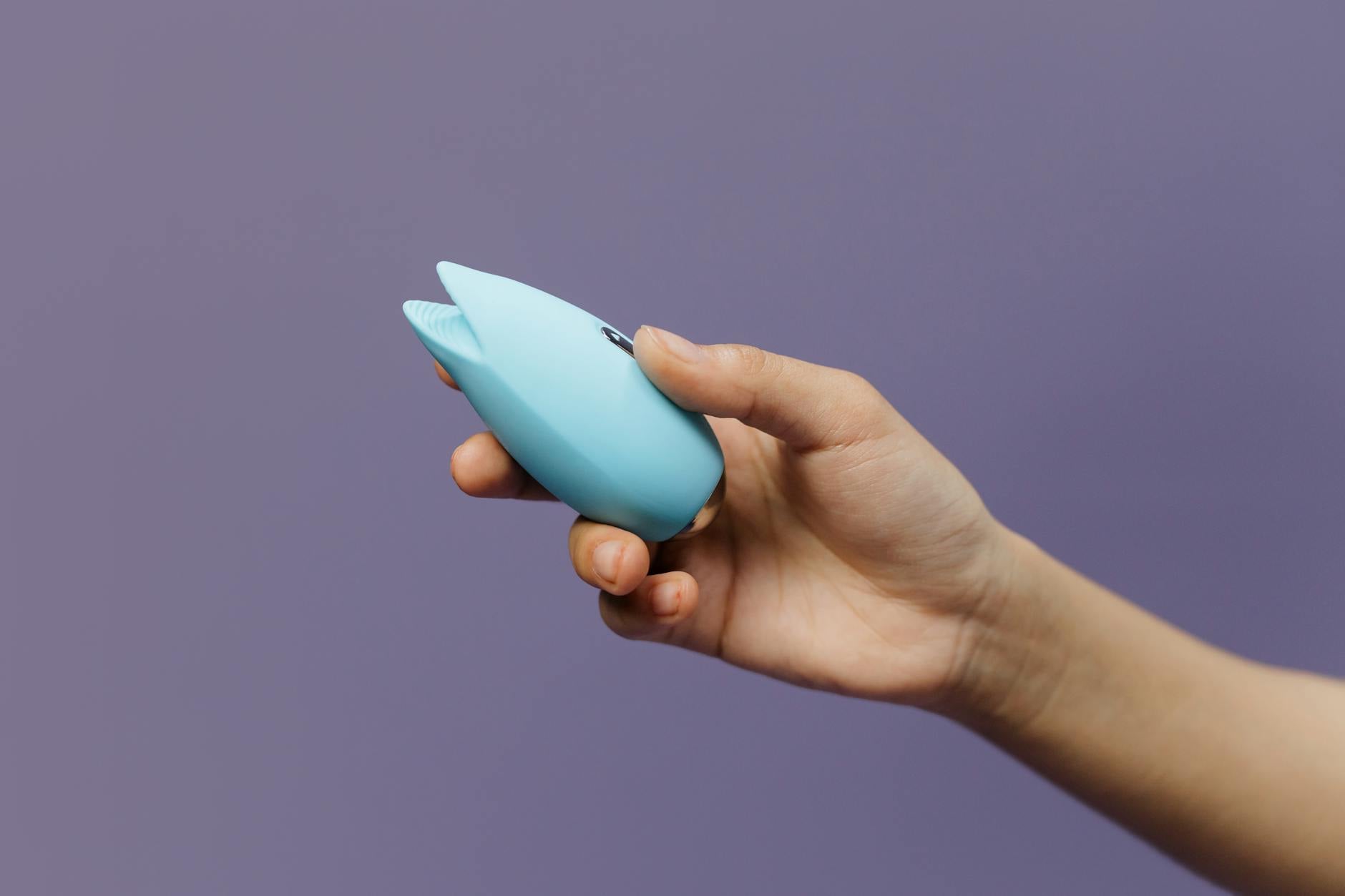
Air-pulse technology like the Lem vibrator works by creating suction and release patterns that stimulate the thousands of nerve endings around the clitoris. This requires a certain baseline of vascular engorgement (blood flow to the tissue) to feel effective. When you're stressed, that engorgement doesn't happen as readily.
Compare that to a traditional vibrator, which works through direct mechanical stimulation and can feel something even when blood flow is compromised. The Lem's elegance is also its sensitivity. It's more responsive to your nervous system state. That's not a design flaw. That's actually useful information telling you something about what's happening in your body.
The three ways stress changes the experience
Numbness or distance. Stress dampens all sensation. Your clitoris is still there. The vibrator is still there. But the neural signal feels muffled, like you're experiencing pleasure through a thick fog. You might feel pressure or movement, but not much sensation.
Irritation or discomfort. Sometimes stressed bodies reject the stimulation outright. Your pelvic floor gets hypertonic (too tight), which makes everything feel raw or tender. A pattern that usually feels amazing suddenly feels abrasive. This is often misread as "the toy isn't right for me," when actually your nervous system is saying "I'm not available for this right now."
Disconnect from your body. This one's insidious. You can feel the vibrator working, but it feels distant, like it's happening to someone else. You're watching yourself try to feel pleasure instead of actually feeling it. Therapists call this dissociation, and it's a common stress response.
What's happening in your nervous system during arousal
Normally, arousal requires a shift into a parasympathetic state (rest-and-digest mode). Your heart rate stays moderate. Your breathing deepens. Blood redistributes toward your genitals and skin. Your pelvic floor relaxes. Your brain's reward centers light up. You become more sensitive to touch, not less.
When you're anxious or stressed, your nervous system resists that shift. It's too busy running threat-detection software. Your amygdala (fear center) is louder than your nucleus accumbens (pleasure center). Even if you want to relax, your body doesn't quite believe it's safe enough.
This is why "just relax" is the most useless advice ever given. You can't force your nervous system into parasympathetic mode through willpower alone. You need to work with the physiology.
What actually helps: nervous system first
1. Slow your breathing before you slow anything else. Forty-five seconds of slow exhales (breathe in for four, exhale for six) starts to downregulate your nervous system. This isn't woo. It's vagal tone work, and it has research behind it. Do this before you even touch the Lem.
2. Give yourself permission to feel nothing. Counterintuitive, but true. The moment you stop expecting pleasure and start just noticing sensation, your nervous system relaxes slightly. Expectation creates tension. Acceptance creates space.
3. Start with non-sexual touch. Massage your shoulders. Stroke your forearms. Feel your feet on the floor. This tells your nervous system that touch is safe, which makes genital touch feel safer too. Wait five to ten minutes before introducing your lemon vibrator.
4. Use the Lem on a lower pattern. Stress narrows your window of tolerance. A pattern that usually feels perfect might be too intense when you're activated. Start at pattern 1 or 2 and let your body adjust. You're not going backwards. You're meeting your nervous system where it actually is.
5. Combine with temperature or texture. Cold hands on warm skin. Soft blankets. Scent. Your brain loves multi-sensory input, and it helps pull you out of threat-detection mode. Light a candle. Play music that makes you feel calm. These aren't distractions. They're nervous system support.
The longer strategy
One-off stress is one thing. Chronic stress is different. If you're constantly anxious, your baseline nervous system state shifts. You live in a low-grade sympathetic activation. Your body might feel persistently numb or contracted, even when you're not in an acute crisis.
That's when you might want to look beyond the toy and at what's feeding the stress. Are you sleeping enough? Moving your body daily? Processing emotions, or just pushing through? Why lemon vibrators take longer to feel good when you're stressed covers the lifestyle piece in depth, but the short version is: pleasure is downstream of nervous system health.
If stress is chronic and tangled with relationship dynamics, how to use lemon vibrators with a partner has strategies for resetting connection, which itself is nervous system medicine.
When to know this isn't just stress
If numbness or pain persists even when you're calm and well-rested, that's different. Persistent genital arousal disorder, post-traumatic stress responses, or sometimes medication side effects can all flatten sensation in ways that stress alone doesn't explain. That's worth talking to a doctor about.
But most of the time? The lemon vibrator isn't the problem. Your nervous system just needs the right conditions to do what it naturally does.
The permission part
Here's what I want you to hear. Your body's sensitivity to your stress level isn't a flaw. It's feedback. It's your nervous system giving you real-time information about what's actually happening inside you. That's valuable. And once you decode it, you can work with it.
Some days the Lem will feel like magic. Other days it'll feel like nothing. That's not inconsistency. That's your body being honest about what it has available to give you right now. The pleasure isn't going anywhere. Neither is the toy. You're just learning to meet your nervous system in the conditions it actually needs.
People also ask
Can anxiety permanently change how I respond to pleasure?
No, but chronic, untreated anxiety can absolutely flatten your baseline arousal capacity. Your nervous system gets stuck in protective mode. The good news is that it's reversible. As stress decreases and you build nervous system regulation skills, sexual response typically rebounds. This isn't instant, but it's real.
Why do lemon vibrators feel different than other vibrators when I'm stressed?
Air-pulse technology depends on tissue engorgement to feel its best. When stress reduces blood flow and genital sensitivity, the suction-and-release pattern feels less distinct. A traditional vibrator that works through direct mechanical buzz might feel something even when blood flow is low. That doesn't make it better, just different in how it responds to your nervous system state.
How long should I wait after a stressful day before trying my vibrator?
There's no magic number, but aim for at least 30 minutes of genuine calm. Do something that your nervous system actually finds relaxing. For some people that's a walk. For others it's a bath or a good conversation. You'll know when the shift happens. Your breathing naturally slows. Your shoulders drop. That's when your body is actually ready.
Does this happen with every person, or just some people?
This is normal neurobiology, not individual variation. Everyone's brain and body respond this way to stress. Some people notice it more because they pay attention or because they have higher baseline anxiety. But the mechanism is universal.
Can I use my lemon clitoral vibrator when I'm moderately anxious, or should I wait until I'm completely calm?
Moderate anxiety is often fine. You don't need zen-master calm. You just need your nervous system to have shifted enough that rest-and-digest mode is accessible. Think of it like a dimmer switch, not an on-off. You can engage at partial capacity. Sometimes pleasure itself actually helps bring your nervous system down further.
Is there anything wrong with my lemon vibrator if it doesn't feel good when I'm stressed?
Your vibrator is fine. This is neurobiology, not a toy malfunction. The Lem and other lemon clitoral vibrators are working exactly as designed. Your nervous system is just telling you it's not in the right state to receive that particular kind of stimulation right now. Different information, not a defect.
Your pleasure matters. And so does understanding what your body actually needs in order to feel it. Once you start reading your nervous system's signals, you get to make choices instead of just feeling broken.
Sources
Bader, J., et al. (2009). Cortisol and sexual dysfunction. Journal of Sexual Medicine, 6(9), 2462-2474.
Davis, C. M. (2000). Physiological and psychological aspects of sexual response. Journal of Sex & Marital Therapy, 26(2), 101-114.
Pollock, C., & Zuckerman, B. (1992). Reassurance and arousal in anxious patients. Archives of Sexual Behavior, 21(3), 213-228.
Porges, S. W. (2011). The polyvagal theory: Neurophysiological foundations of emotions, attachment, communication, and self-regulation. W.W. Norton & Company.